
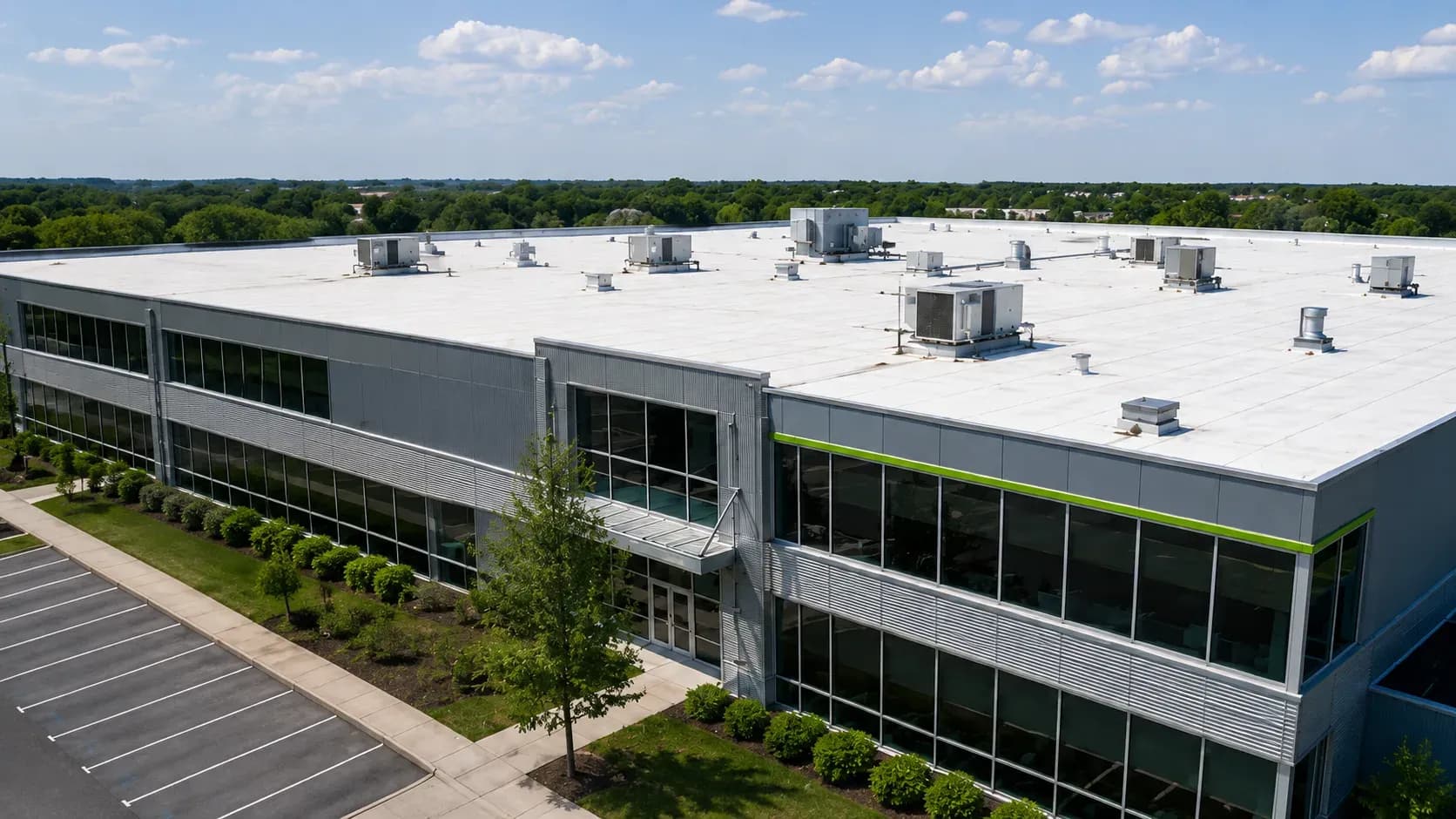
145 MPH Winds, 240 Roofs, Zero Failures: What Storm Testing Proves About Coated Roofs
A restoration is only worth the savings if it survives the weather. Here’s the testing record behind fluid-applied, fabric-reinforced systems.
The cost case for restoring a roof instead of tearing it off is straightforward — roughly $4 per square foot versus roughly $10. The question building owners ask next is the right one: does a coated roof actually hold up when the weather turns?
The lab standard
Fluid-applied, fabric-reinforced systems using this approach have passed FM-4470 — the Factory Mutual standard that puts a roof assembly through wind uplift, hail impact, fire, and water leakage testing rather than evaluating the coating alone.
That distinction matters. A product datasheet describes a material; FM-4470 evaluates the whole assembly as it will actually sit on a building.
The field test nobody schedules
The more convincing evidence came from a storm. Super Typhoon Paka hit with 145 mph sustained winds and gusts measured at 236 mph. More than 240 roofs coated with this type of system were in its path.
All of them remained intact.
Why a seamless system behaves differently in a storm
Wind doesn’t usually peel a roof from the middle of the field — it finds an edge, a seam, or a penetration and works from there.
A fluid-applied system is monolithic: the fabric reinforcement and coating cure into one continuous surface with no welded seams to separate and no mechanically fastened sheets to lift. The details that fail first on a traditional membrane roof are the ones this approach eliminates.
What this means for a restoration decision
Durability is usually the objection raised against restoring rather than replacing — the assumption that a coating is a cosmetic fix buying a few years.
The testing record says otherwise: a properly installed, fabric-reinforced system is a structural roofing assembly that can be renewed rather than replaced, at a fraction of the cost of a tear-off, without trading away storm performance.
Ask for the test data. A restoration system that can’t show assembly-level wind and hail results isn’t the same product category, whatever the spec sheet says.
You may also like
 Read More
Projects & Case Studies
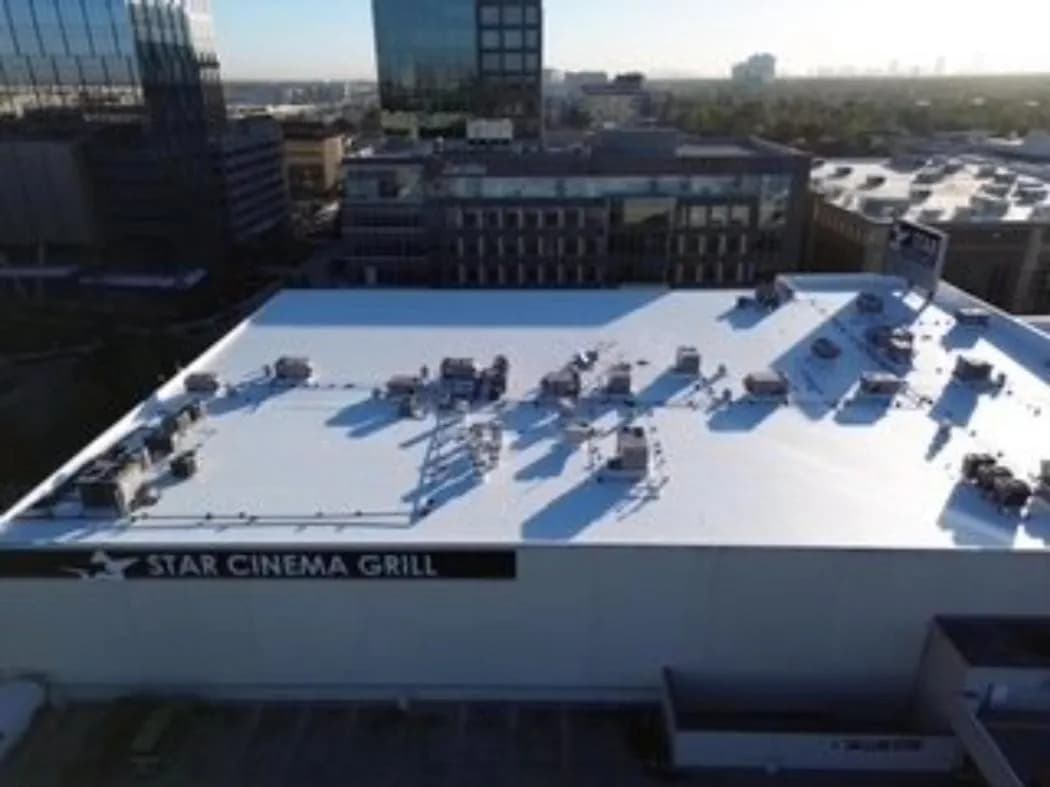
Star Cinema Grill: 45,000 SF Over Mod Bit, and Not One Show Cancelled
A theatre roof has one constraint that outranks all the others: quiet. Here’s how we restored 45,000 square feet without closing an auditorium or interrupting a showing.

 Read More
Projects & Case Studies
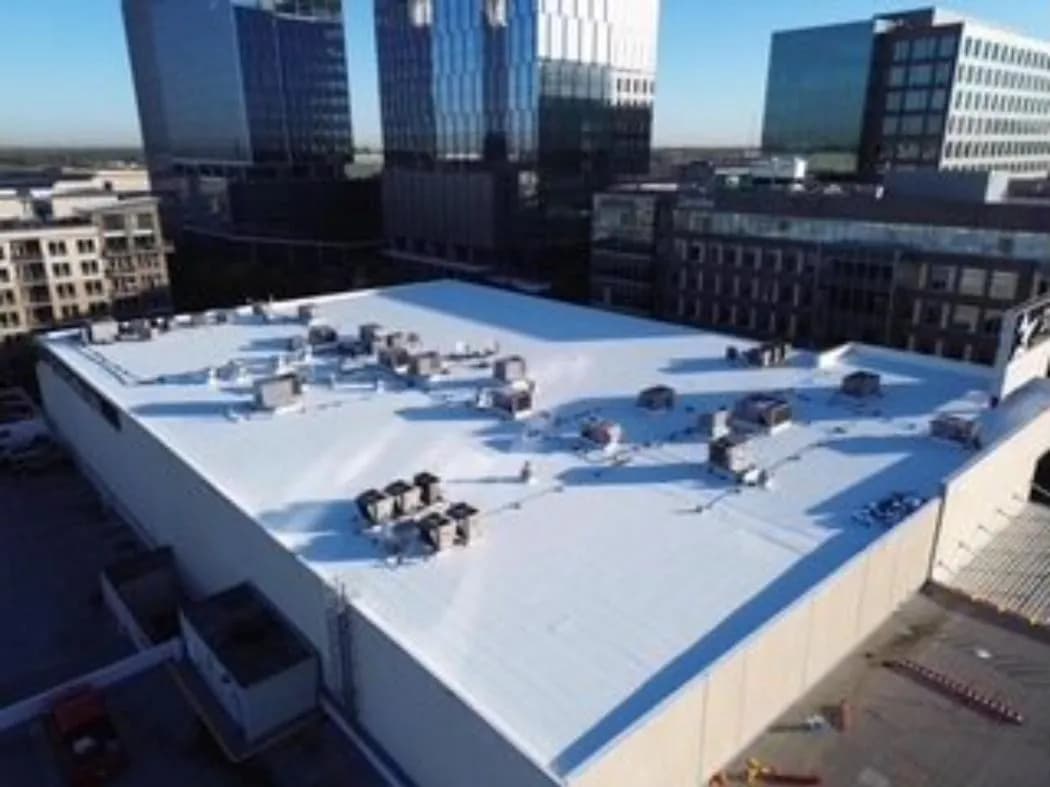
CityCentre Convention Center: 40,000 SF of Mod Bit in the Middle of a Busy District
A modified bitumen roof in one of Houston's densest mixed-use districts, restored in place — with high-rises on every side and an event space that had to stay open.
 Read More
Projects & Case Studies
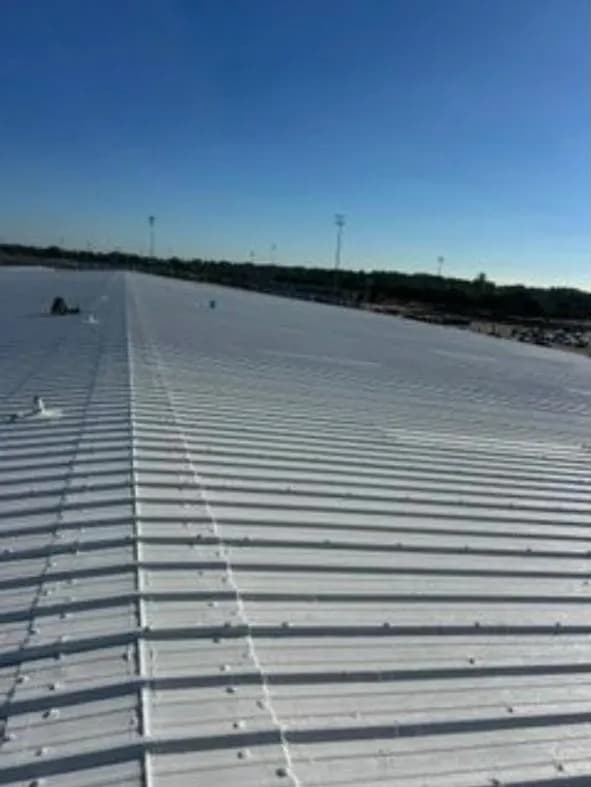
Gulf States Toyota: 109,000 SF of R-Panel Metal, Coated End to End
Our largest metal roof restoration — more than two and a half acres of R-panel coated end to end, with the distribution facility running normally the entire time.