
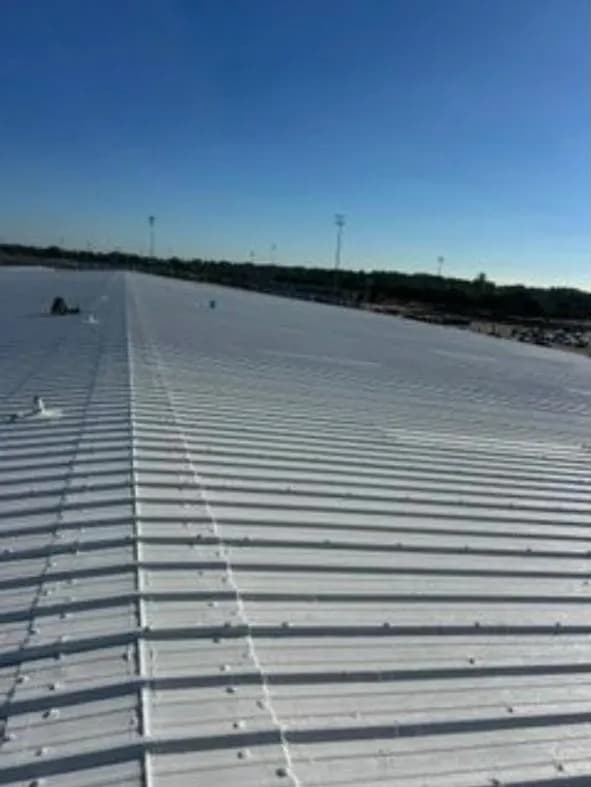
Gulf States Toyota: 109,000 SF of R-Panel Metal, Coated End to End
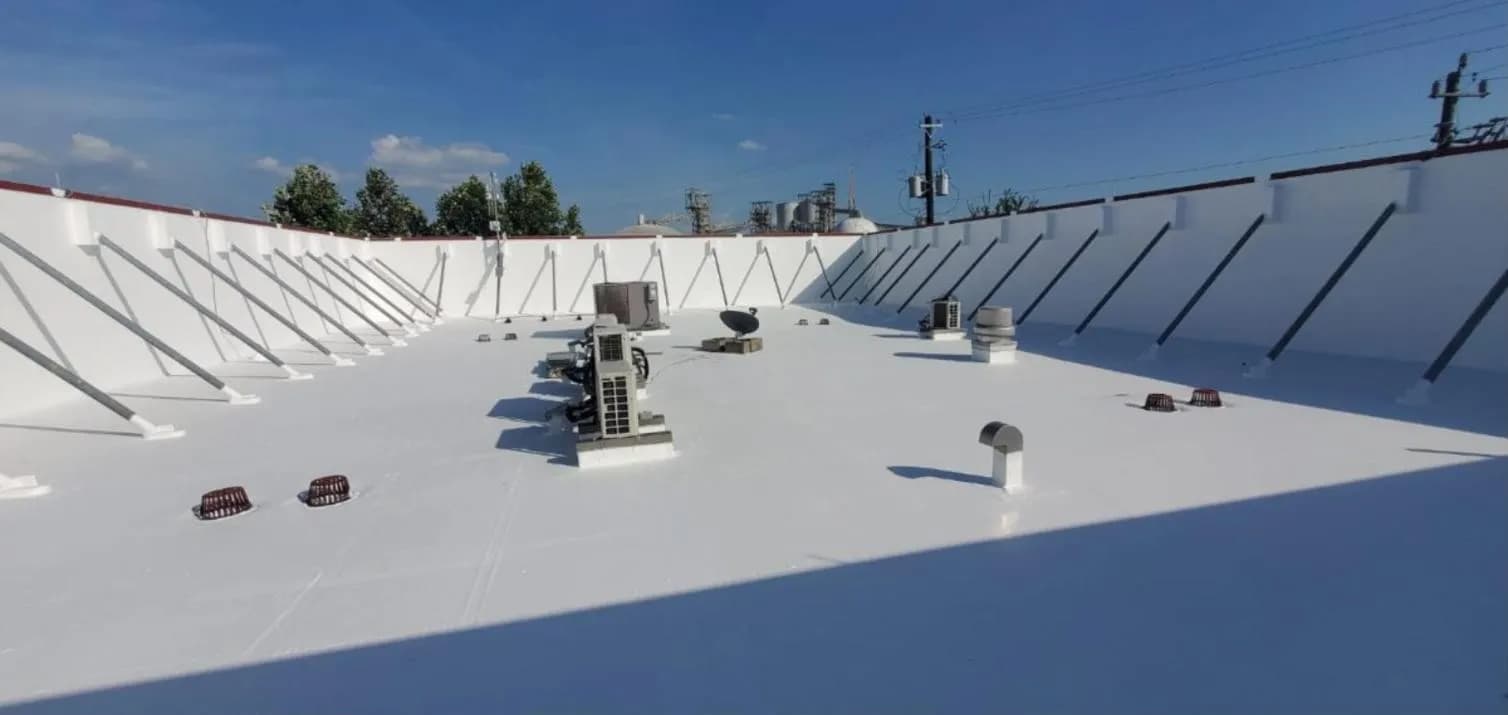
Our largest metal roof restoration — more than two and a half acres of R-panel coated end to end, with the distribution facility running normally the entire time.
The challenge
109,000 square feet is about two and a half acres of roof. Underneath is a working distribution operation. Vehicles and inventory do not tolerate water or the risk of coating overspray, and the facility does not shut down for a roof. We typically spray the coating but in this case, it was hand rolled. Additionally, we removed many old skylights and replaced them with new metal. We had to coordinate these efforts with the workers below. Downtime was unacceptable so we had to be in constant communication and coordination in order to complete our job without interfering with theirs.
What we did
We restored the roof in place. Every fastener was detailed, every vertical seam sealed and every horizontal seam was reinforced with fabric. Over 80,000 screws and over 36,000 feet of vertical seams were all sealed by hand.
Why it matters
No panels came off, nothing went to a landfill, and the owner kept the deck they already had.
At this scale the reflectivity matters more than anywhere else on this list. Bare metal under Houston sun radiates heat straight down into the building. Two and a half acres of white, reflective surface changes the thermal behavior of the whole facility.
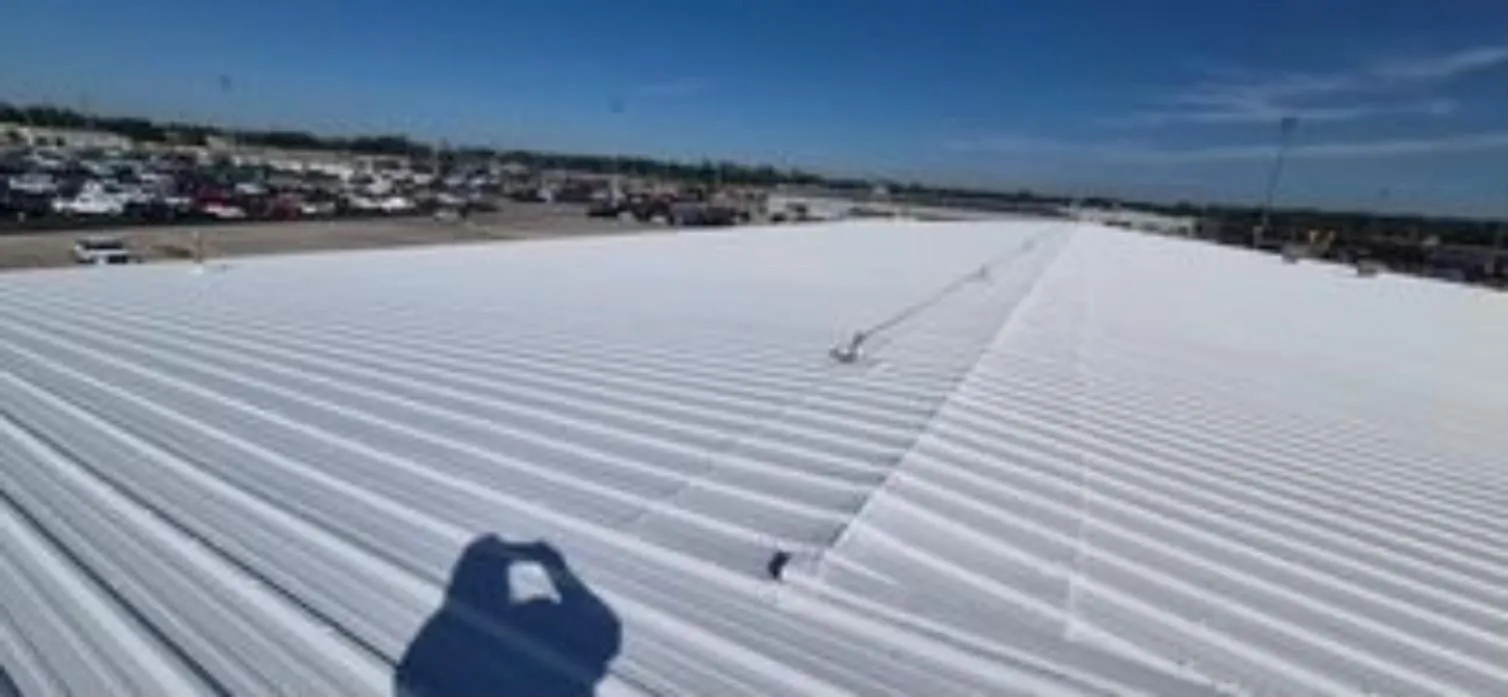
One note on upkeep: a reflective roof only keeps paying while it stays reflective. Two and a half acres of white surface will pick up Houston dirt, so plan on washing it every four to five years to hold the roof at maximum reflectivity and efficiency.
Have a roof like this one?
Harvest restores commercial roofs across the Houston area — fluid-applied roofing and waterproofing over metal, single ply, modified bitumen and gravel-surfaced built-up systems. If your roof is aging and you want to know what it actually needs, we will come look at it.
Harvest · (281) 259-7099 · office@teamhis.com
You may also like
 Read More
Projects & Case Studies
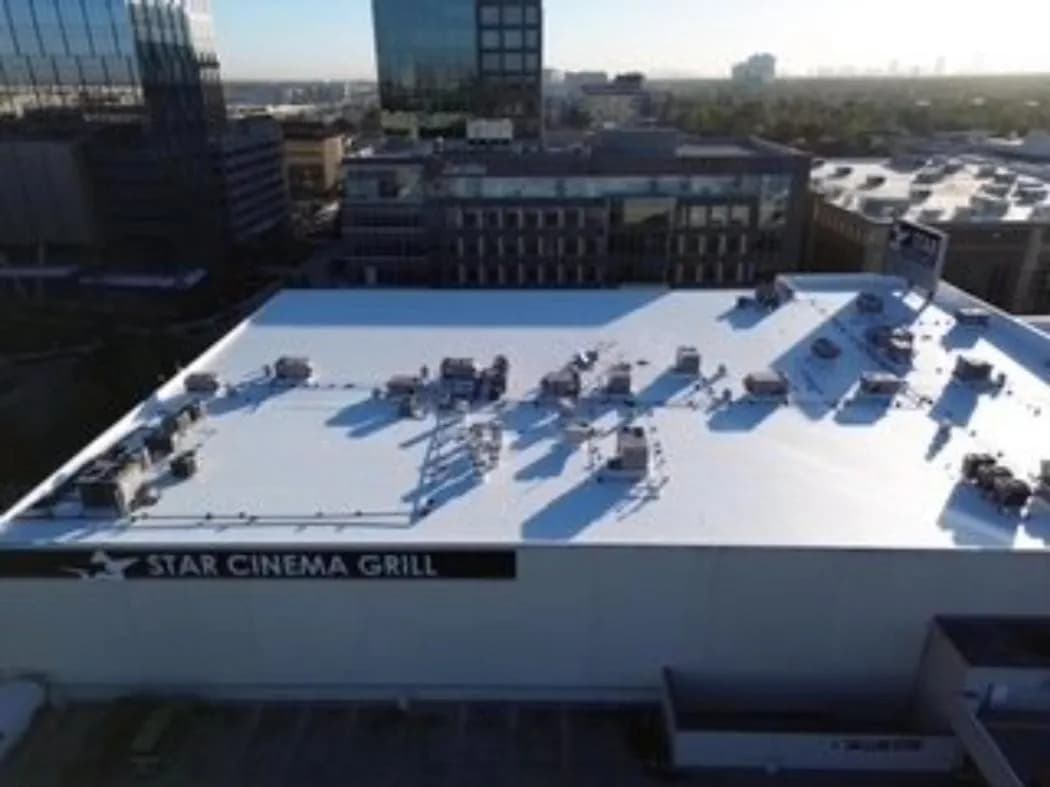
Star Cinema Grill: 45,000 SF Over Mod Bit, and Not One Show Cancelled
A theatre roof has one constraint that outranks all the others: quiet. Here’s how we restored 45,000 square feet without closing an auditorium or interrupting a showing.

 Read More
Projects & Case Studies
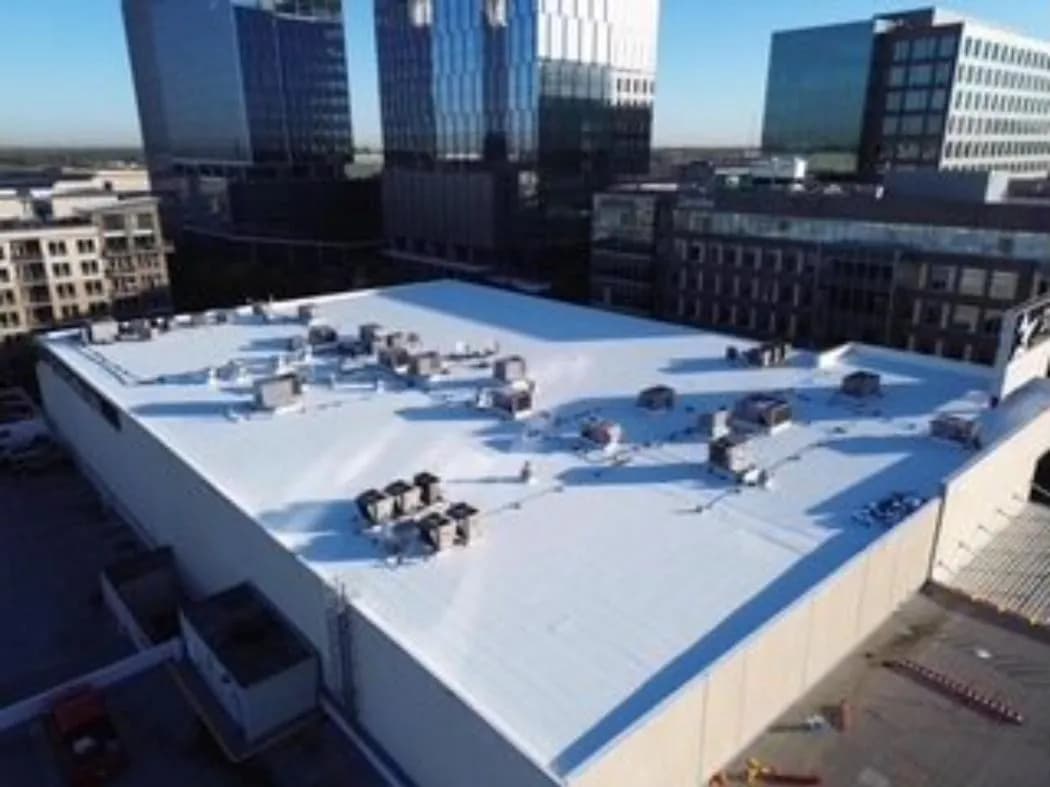
CityCentre Convention Center: 40,000 SF of Mod Bit in the Middle of a Busy District
A modified bitumen roof in one of Houston's densest mixed-use districts, restored in place — with high-rises on every side and an event space that had to stay open.
 Read More
Projects & Case Studies
Port of Houston Firehouse: 18,000 SF and 10-Foot Walls, All in One System
A single-ply roof on a port firehouse gets restored along with ten feet of parapet wall — and on this building the wall details took longer to execute than the entire roof surface.