
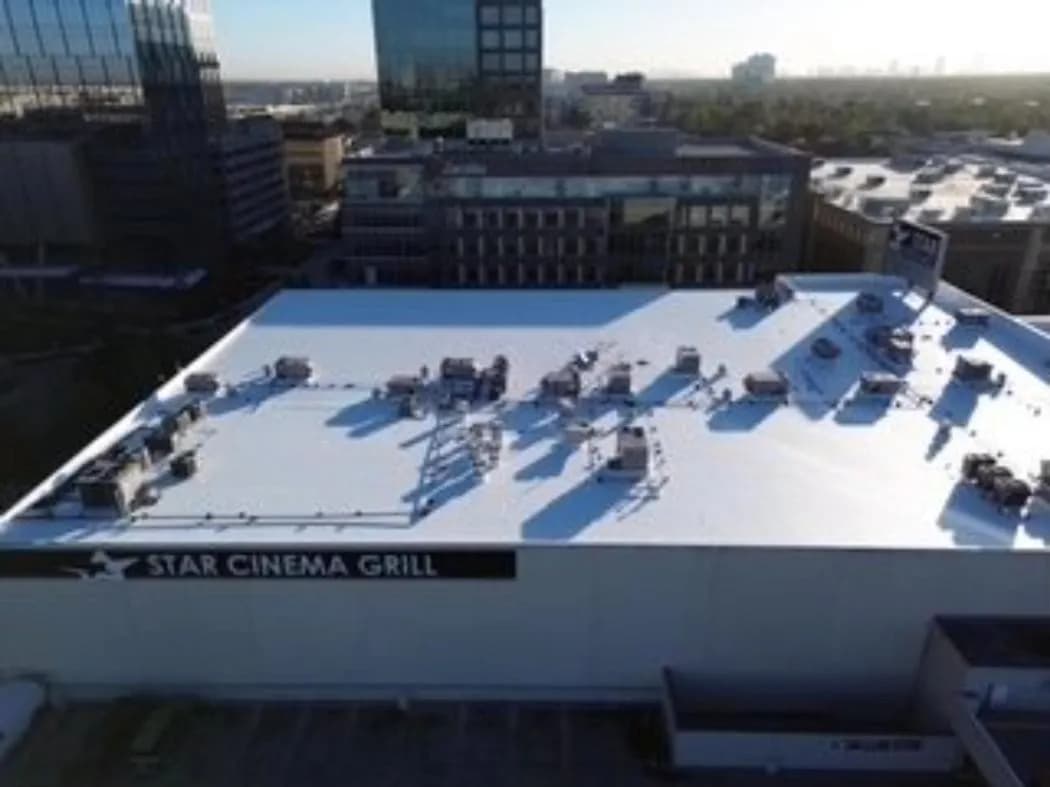
Star Cinema Grill: 45,000 SF Over Mod Bit, and Not One Show Cancelled
A theatre roof has one constraint that outranks all the others: quiet. Here’s how we restored 45,000 square feet without closing an auditorium or interrupting a showing.
The challenge
Each situation is different. While our process does not typically change, we often make adjustments in our plans when circumstances require that. While our process is usually considered non disruptive, we found out in this case that even the slightest noise can make an impact. Movie goers want quiet. Much to our surprise, we were notified that when we were moving our buckets of material, and placing them on the roof top, that due to their weight, it was creating enough noise so to be disruptive to movie goers.
Compared to traditional roofing, this is quiet, but even our process under these conditions interfered with the movie theater.
In order to accommodate our customer, we started early and stopped at 11:30 in the morning, when the first showings began. Since this process has flexibility, we were able to do the details, which required less movement of material, for the rest of the day. Additionally, we patched all existing leaks as temporary fixes to the existing problems they were having.
What we did
We restored the existing mod bit roof in place with a fluid-applied system, reinforced with fabric, across all 45,000 square feet. Every unit, curb, support and drain on that crowded deck was detailed into the system.
The choice to restore rather than replace was driven by the building's operation as much as by the roof's condition. A tear-off over a live auditorium means an open deck over a dark room full of equipment — not a risk worth taking when the existing membrane is sound enough to serve as a base.
The cost of restoration vs a new tear off was significant, and the cost to restore was lower than a single ply layover.
Why it matters
The theatre kept operating. Once we modified our approach, not a single showing was disrupted, no debris moved through public areas, and 45,000 square feet of roofing stayed out of a landfill.
One note on upkeep: a white roof only saves energy while it stays white. Houston air puts dirt on a reflective surface over time, so plan on washing the roof every four to five years to hold it at maximum reflectivity and efficiency.
Have a roof like this one?
Harvest restores commercial roofs across the Houston area — fluid-applied roofing and waterproofing over metal, single ply, modified bitumen and gravel-surfaced built-up systems. If your roof is aging and you want to know what it actually needs, we will come look at it.
Harvest · (281) 259-7099 · office@teamhis.com · harvestroofs.com
You may also like
 Read More
Projects & Case Studies
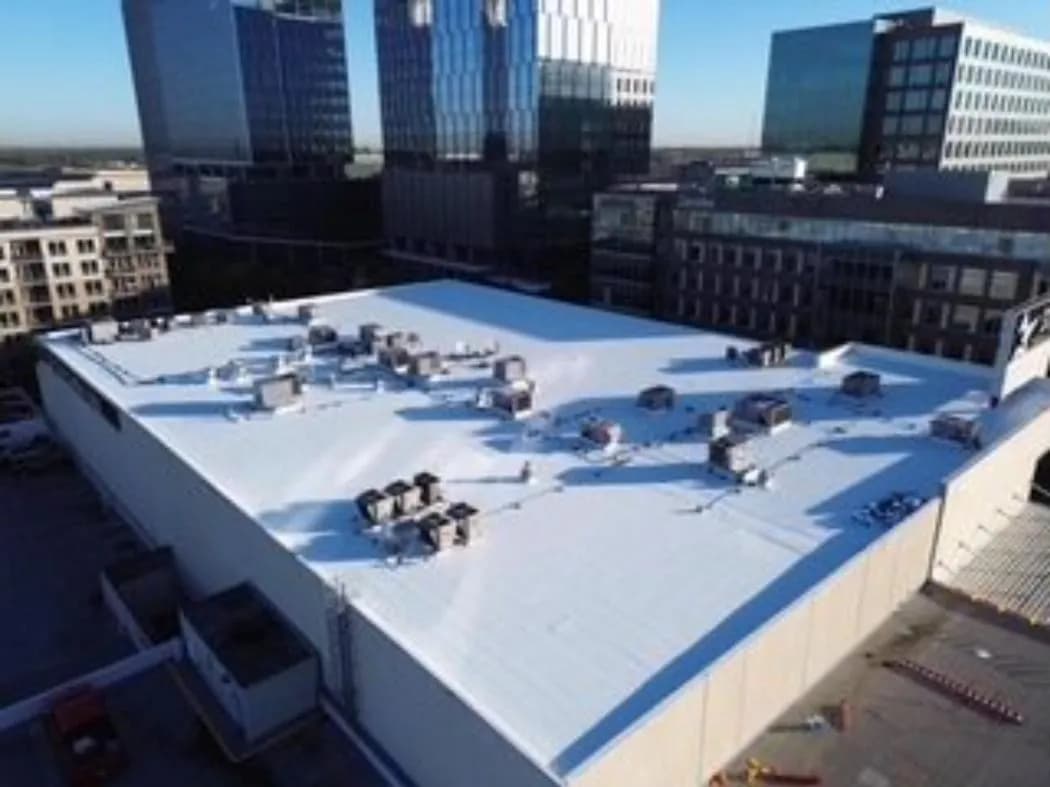
CityCentre Convention Center: 40,000 SF of Mod Bit in the Middle of a Busy District
A modified bitumen roof in one of Houston's densest mixed-use districts, restored in place — with high-rises on every side and an event space that had to stay open.

 Read More
Projects & Case Studies
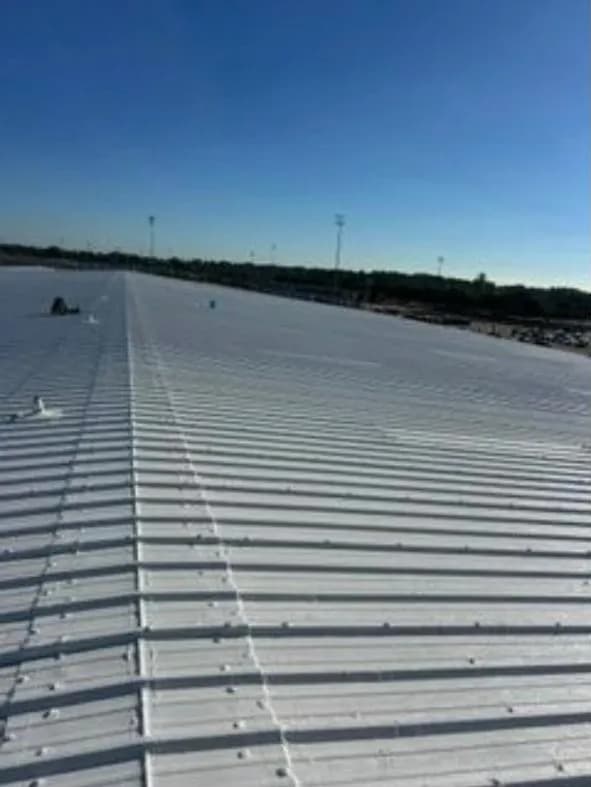
Gulf States Toyota: 109,000 SF of R-Panel Metal, Coated End to End
Our largest metal roof restoration — more than two and a half acres of R-panel coated end to end, with the distribution facility running normally the entire time.
 Read More
Projects & Case Studies
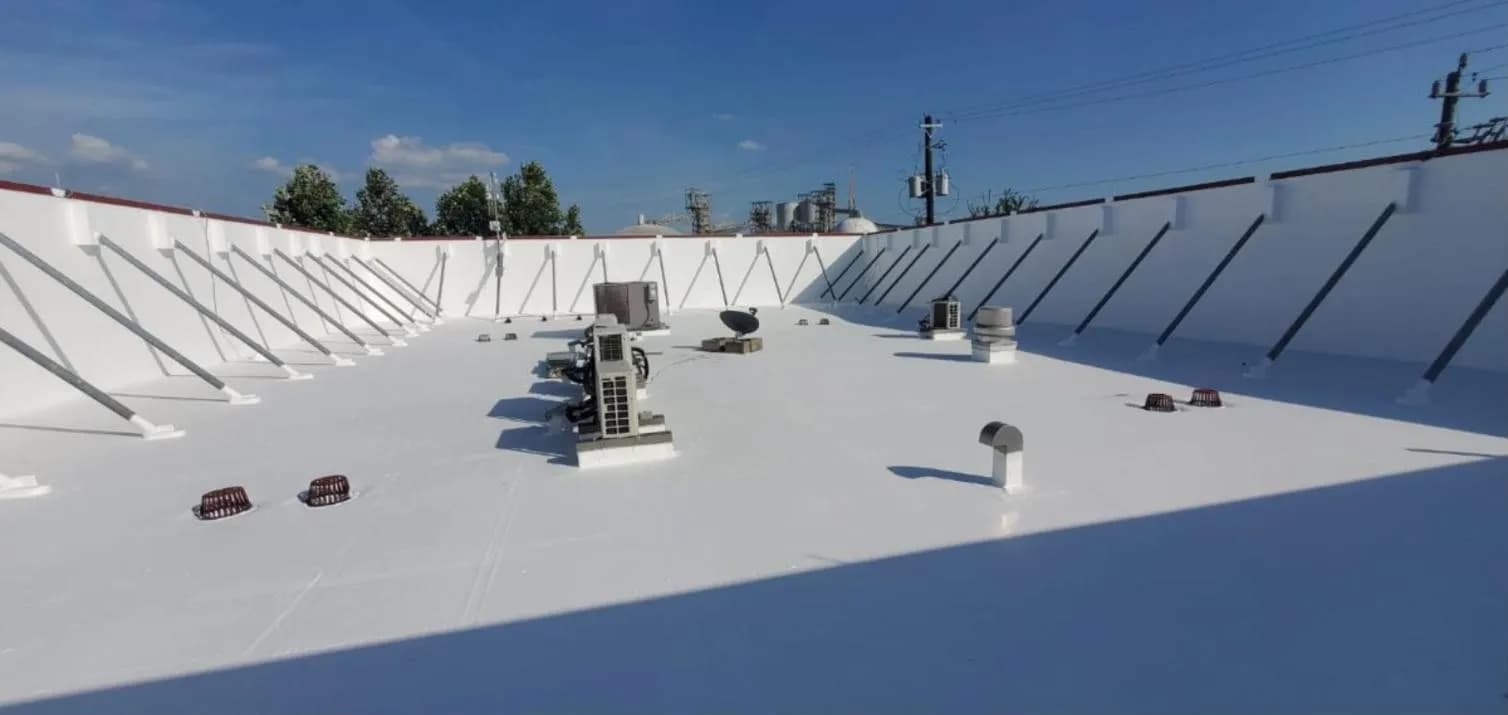
Port of Houston Firehouse: 18,000 SF and 10-Foot Walls, All in One System
A single-ply roof on a port firehouse gets restored along with ten feet of parapet wall — and on this building the wall details took longer to execute than the entire roof surface.