
Port of Houston Firehouse: 18,000 SF and 10-Foot Walls, All in One System
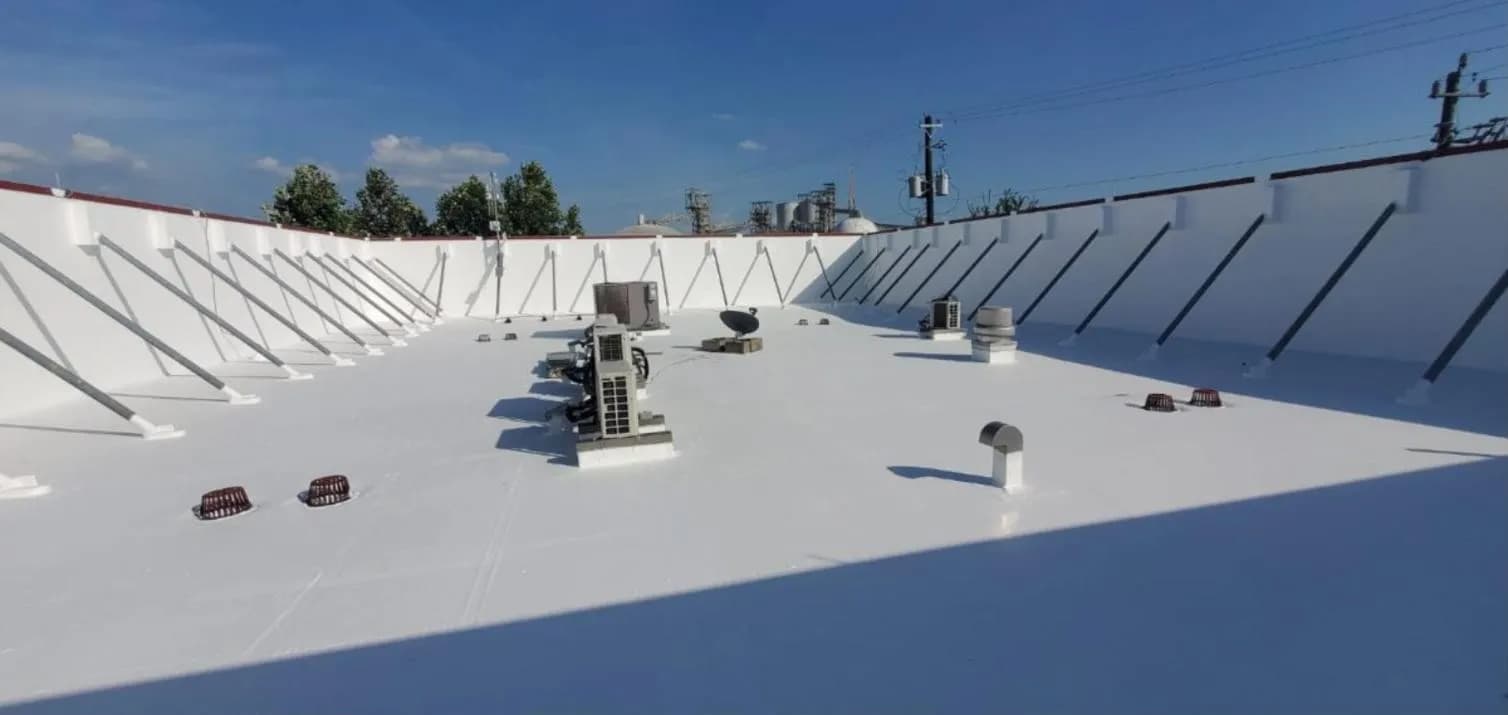
A single-ply roof on a port firehouse gets restored along with ten feet of parapet wall — and on this building the wall details took longer to execute than the entire roof surface.
The challenge
This is an emergency services building on the Houston Ship Channel. It cannot go out of service, and it sits in about the most aggressive environment a roof can be asked to survive: heat, humidity, salt air and industrial exposure, year round.
The roof itself is single-ply, and it is surrounded by parapet walls that run about ten feet tall. The walls are where the work was. Ten feet of vertical surface is a long run of detail to execute off a ladder, and these walls also carry a row of standing poles that each had to be sealed and secured individually, with crews working in pairs to do it safely.
The arithmetic of the job ended up inverted: those wall and pole details took our crews longer to finish than the whole 18,000 square feet of roof field.
What we did
We restored the roof and the walls as one assembly. The fluid-applied system goes over the existing single-ply membrane and continues straight up the full height of the parapets, so the horizontal-to-vertical transition is no longer a joint between two different materials — it is the same continuous membrane turning a corner.
Every curb, drain, vent and equipment support on the deck was detailed into that same system. Nothing on this roof is tied in with a separate patch.
Why it matters
The firehouse stayed operational throughout. There was no tear-off, no open deck and no period where the building was relying on temporary protection.
Just as important, the single-ply membrane the owner already paid for stayed in service as part of the assembly rather than going to a landfill. It has a new, seamless, UV-stable surface over it, and the detail that would have failed first is now the strongest part of the roof.
Of significance is that these walls showed the versatility of the system, being just as fully adhered and monolithic as the field.
One note on upkeep: a reflective roof only keeps saving energy while it stays clean. Ship Channel air is not kind to a white surface, so plan on washing the roof every four to five years to hold it at maximum reflectivity and efficiency.
Have a roof like this one?
Harvest restores commercial roofs across the Houston area — fluid-applied roofing and waterproofing over metal, single ply, modified bitumen and gravel-surfaced built-up systems. If your roof is aging and you want to know what it actually needs, we will come look at it.
Harvest · (281) 259-7099 · office@teamhis.com
You may also like
 Read More
Projects & Case Studies
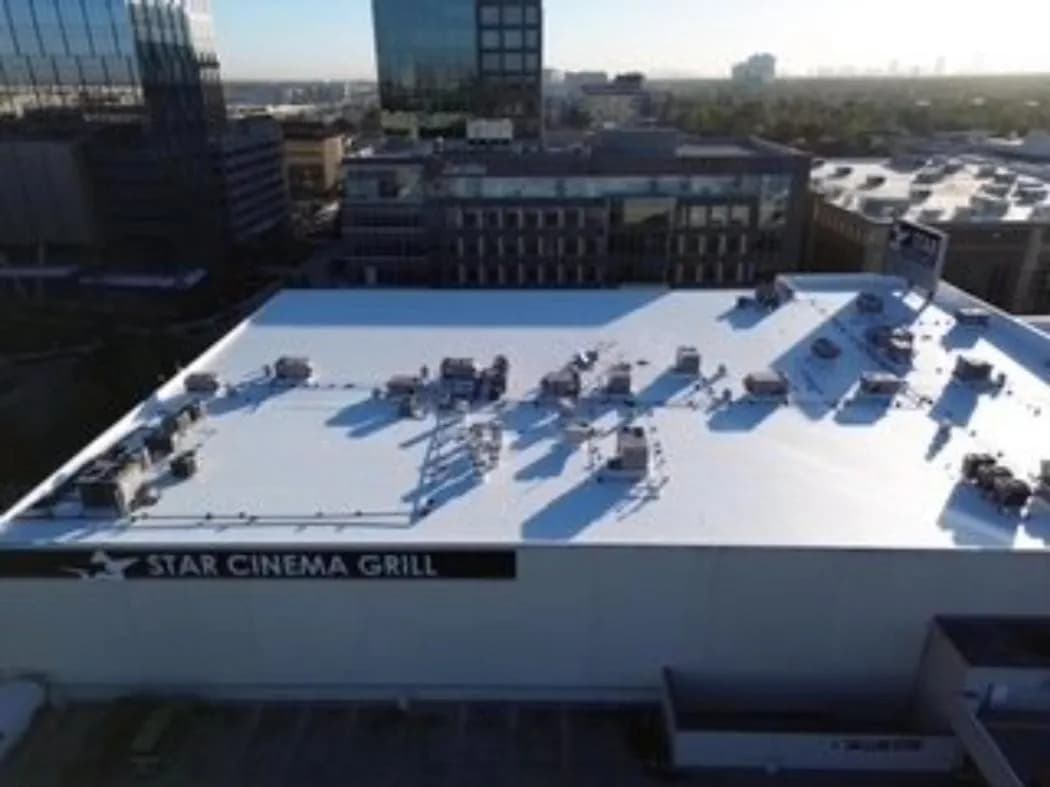
Star Cinema Grill: 45,000 SF Over Mod Bit, and Not One Show Cancelled
A theatre roof has one constraint that outranks all the others: quiet. Here’s how we restored 45,000 square feet without closing an auditorium or interrupting a showing.

 Read More
Projects & Case Studies
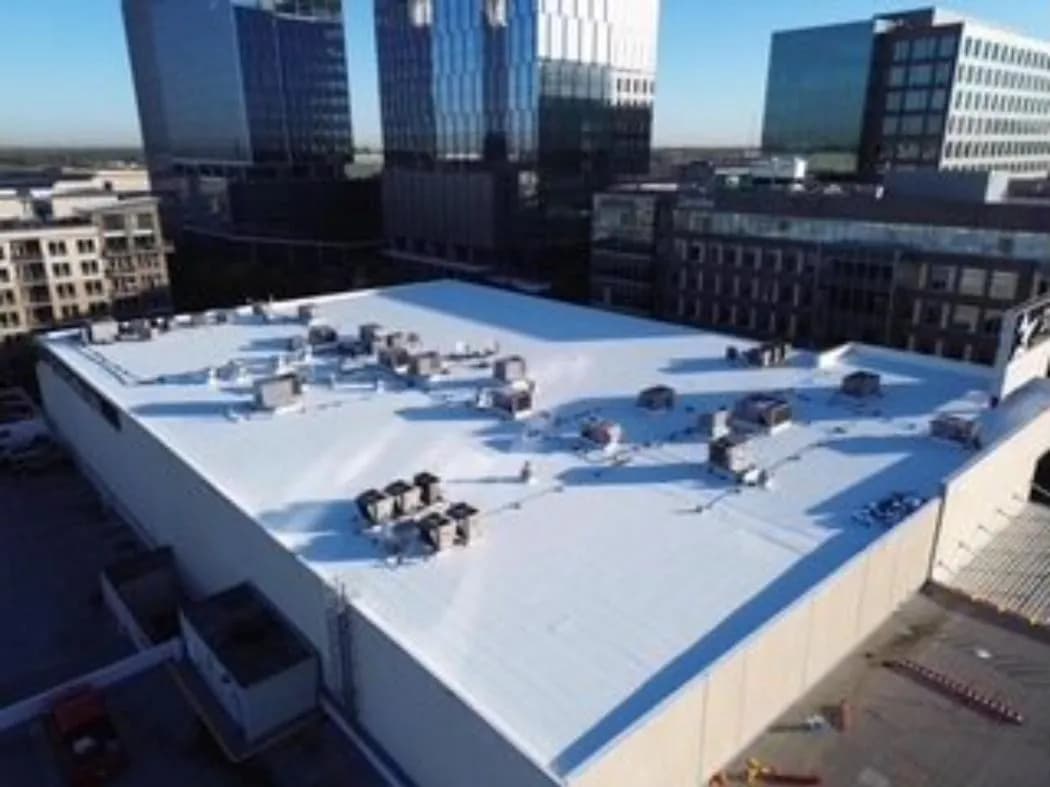
CityCentre Convention Center: 40,000 SF of Mod Bit in the Middle of a Busy District
A modified bitumen roof in one of Houston's densest mixed-use districts, restored in place — with high-rises on every side and an event space that had to stay open.
 Read More
Projects & Case Studies
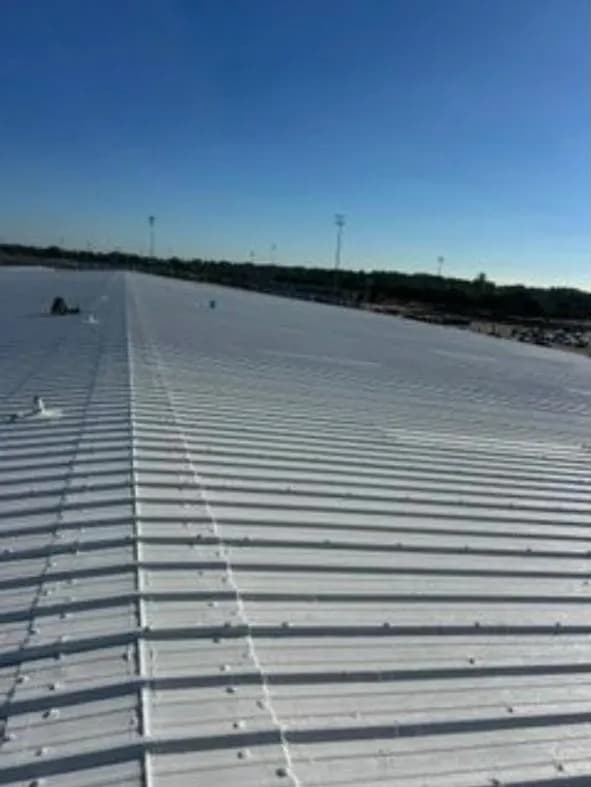
Gulf States Toyota: 109,000 SF of R-Panel Metal, Coated End to End
Our largest metal roof restoration — more than two and a half acres of R-panel coated end to end, with the distribution facility running normally the entire time.