
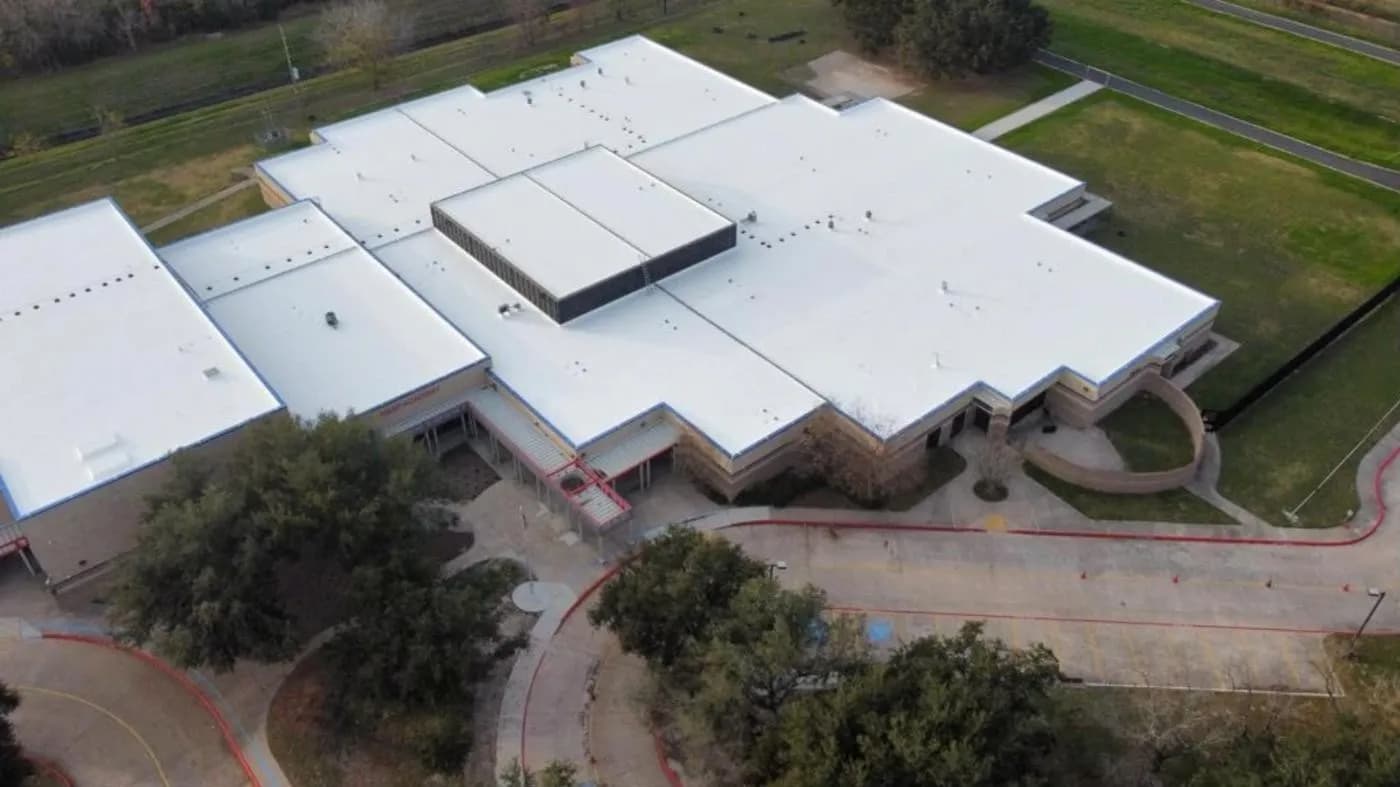
Spring Leadership Academy: 85,000 SF of Gravel Roof, Renewed Without a Tear-Off
A gravel-surfaced built-up roof at Spring ISD’s Spring Leadership Academy gets spudded smooth and restored as a reinforced fluid-applied fabric system — 85,000 square feet, with the campus in session.
The challenge
Gravel-surfaced built-up roofs were the standard on school buildings for decades, and a lot of them are still out there. The gravel protects the asphalt below from UV, but it also hides everything. You cannot see a split. You cannot see where the flashing has pulled. And you cannot coat over it, a fluid-applied system needs a sound, smooth substrate to bond to, and loose aggregate is the opposite of that.
The challenge is to minimize the disruption as much as possible, and since this was done during the winter, weather was a factor. Cool damp weather shortens the workday. Dew has to dry before starting and we needed to end the day earlier to allow for drying overnight. The cool air slows down that process. In this case production time was the greatest enemy.
What we did
The gravel was removed during the day while at night spud machines were used to remove embedded asphalt. The vacuum company then vacuumed the loose debris. We then hand spudded the roof to ensure that it was as smooth as possible. We followed this process until completed. Once smooth, we applied the full system.
What comes out the other side is effectively a new, monolithic membrane, one continuous surface with no laps, built over the existing deck.
Scheduling was its own piece of engineering. Spudding gravel is loud, so that work ran overnight, from midnight to morning, while the quieter vacuuming happened during the school day. Our crews stayed in direct contact with district principals throughout, so every building knew what was happening above it and when.
Why it matters for the campus
The existing roof stayed in place as the base layer. That kept 85,000 square feet of material out of a landfill, kept the building closed to weather throughout, and kept the work off the critical path of the school calendar.
The finished white surface also changes how the building behaves in summer. Dark, gravel-covered roofs absorb heat and hand it straight to the HVAC system. A reflective surface over that same deck lowers the load, and on a campus this size that shows up on the utility bill.
One note on upkeep: a white roof only saves energy while it stays white. Houston air puts dirt on a reflective surface over time, so plan on washing the roof every four to five years to hold it at maximum reflectivity and efficiency.
Have a roof like this one?
Harvest restores commercial roofs across the Houston area — fluid-applied roofing and waterproofing over metal, single ply, modified bitumen and gravel-surfaced built-up systems. If your roof is aging and you want to know what it actually needs, we will come look at it.
Harvest · (281) 259-7099 · office@teamhis.com · harvestroofs.com
You may also like
 Read More
Projects & Case Studies
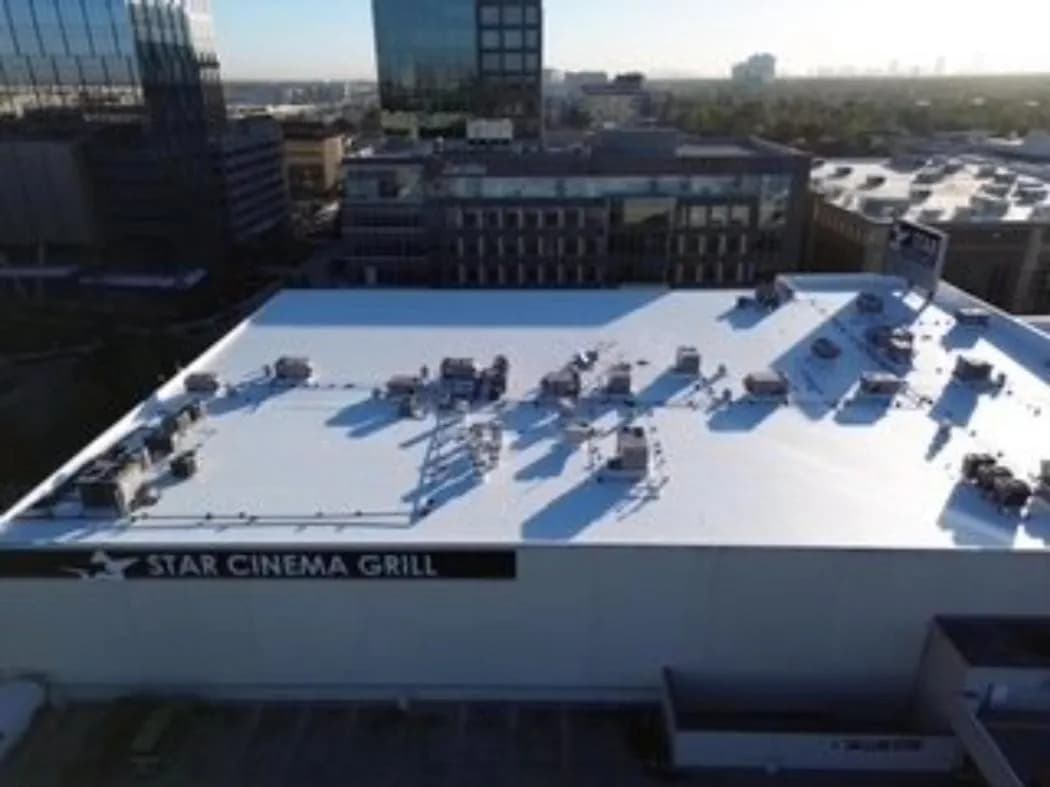
Star Cinema Grill: 45,000 SF Over Mod Bit, and Not One Show Cancelled
A theatre roof has one constraint that outranks all the others: quiet. Here’s how we restored 45,000 square feet without closing an auditorium or interrupting a showing.

 Read More
Projects & Case Studies
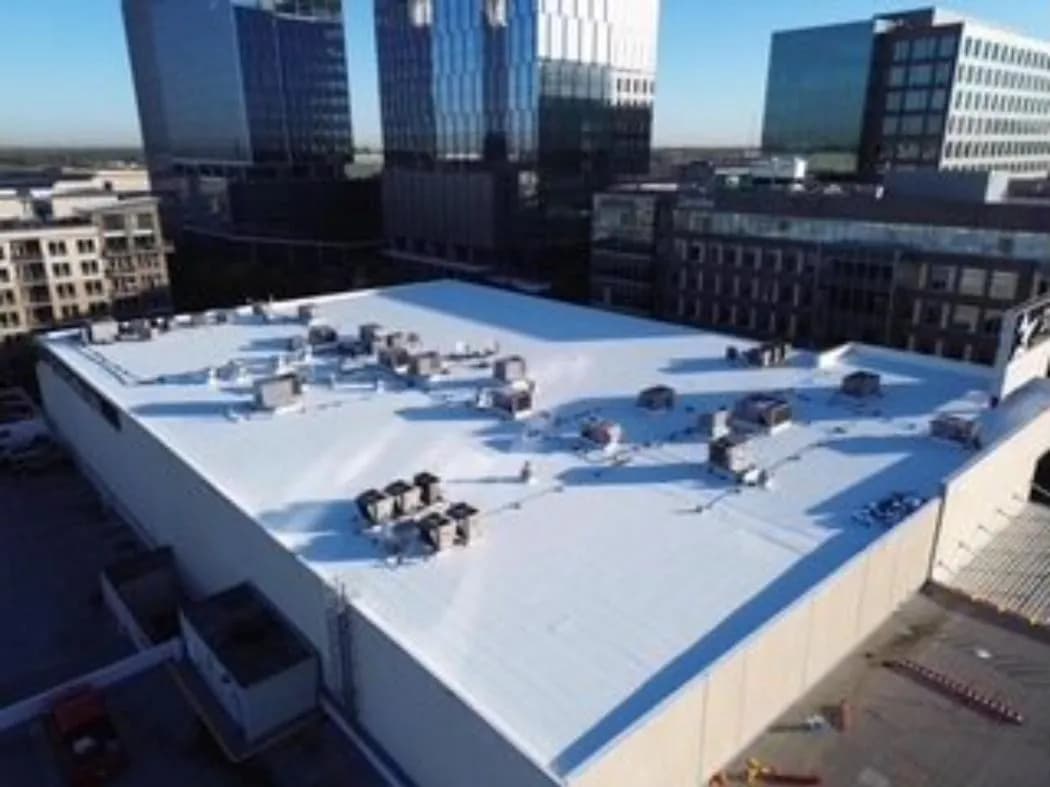
CityCentre Convention Center: 40,000 SF of Mod Bit in the Middle of a Busy District
A modified bitumen roof in one of Houston's densest mixed-use districts, restored in place — with high-rises on every side and an event space that had to stay open.
 Read More
Projects & Case Studies
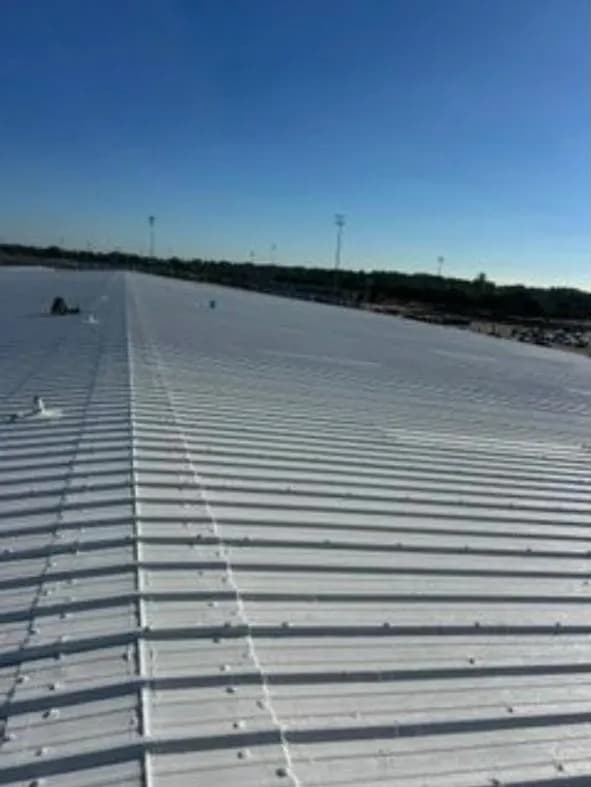
Gulf States Toyota: 109,000 SF of R-Panel Metal, Coated End to End
Our largest metal roof restoration — more than two and a half acres of R-panel coated end to end, with the distribution facility running normally the entire time.