
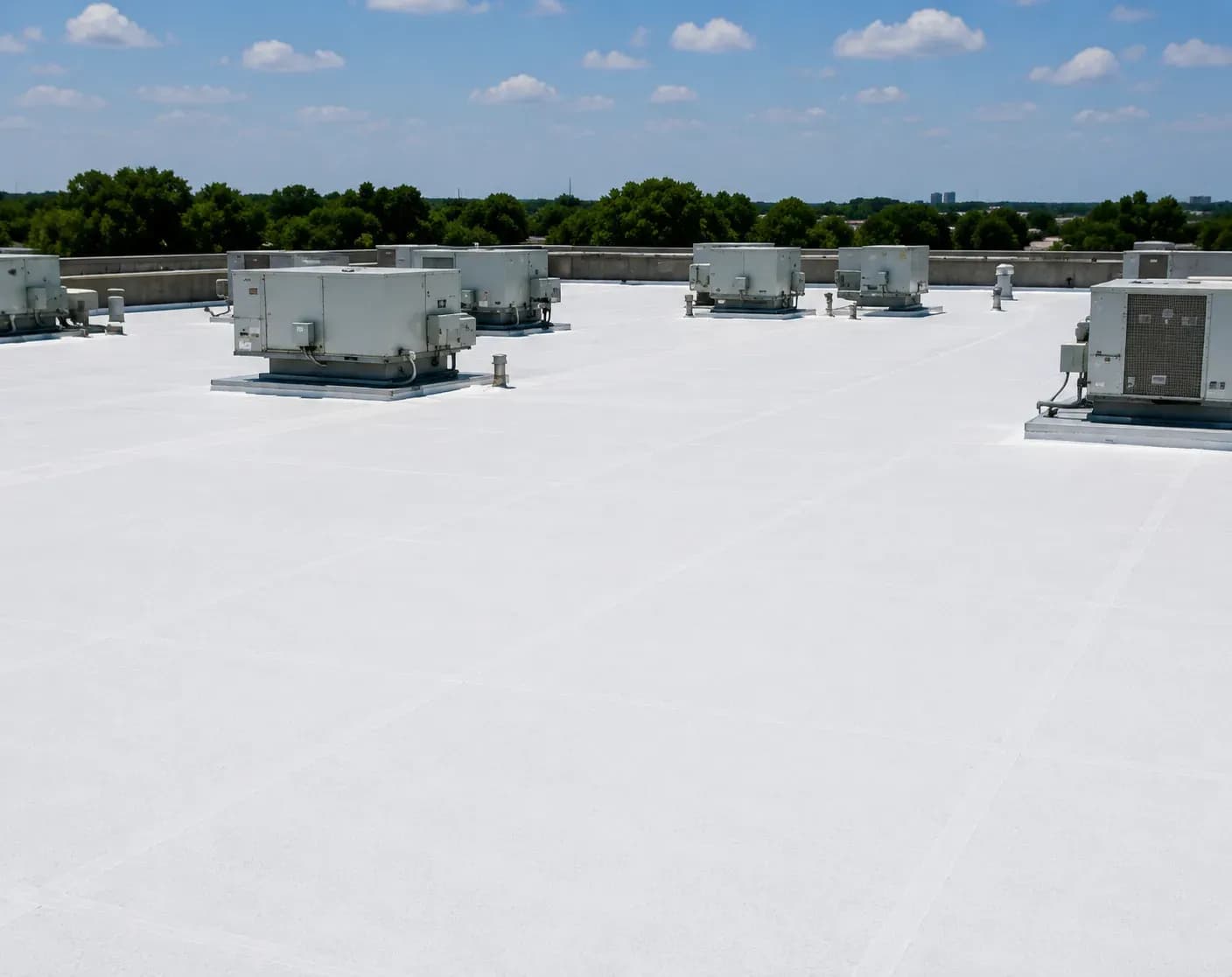
How a Roof Coating System Cut a Texas School District’s Electrical Costs by Up To 20%+
A Texas school district tracked electrical costs before and after a roof coating application. The numbers held up two years later.
Energy savings claims in roofing are common. Verified, multi-year utility data is less common — which is why this case is worth walking through in detail.
The project
A Texas High School and Jr. High School both received a fluid-applied roof coating application in the summer of 2008. Both tracked electrical costs for a full baseline year before the application, then compared that baseline to the two years that followed.
Jr. High School — the numbers
- Year 1 after application: roughly a 20% decrease
- Year 2: roughly a 24% decrease
- Total savings since application: $87,515
High School — the numbers
- Year 1 savings: an 11% reduction
- Year 2: a 14% reduction
- Total savings since application: $156,515
Worth noting: unlike the Jr. High project, the High School’s roof was only about 66% coated rather than fully coated. A complete coating application would likely have produced an even larger cost reduction — which tells you something about how directly coverage percentage correlates with energy savings. Additionally, a one story will be more efficient than a two story.
Beyond the utility bill
Independent temperature readings taken on-site captured a real-world illustration of why the savings show up: a coated roof surface measured 96.3°F on a day when the surrounding roof measured 161.7°F — a temperature differential of more than 65 degrees.
Less heat absorbed by the roof means less heat transferred into the building, which means the HVAC system works less to maintain the same indoor temperature.
A roof coating isn’t just a maintenance decision — it’s an energy decision with a payback period you can actually calculate from utility bills, not just from a manufacturer’s projection.
You may also like
 Read More
Projects & Case Studies
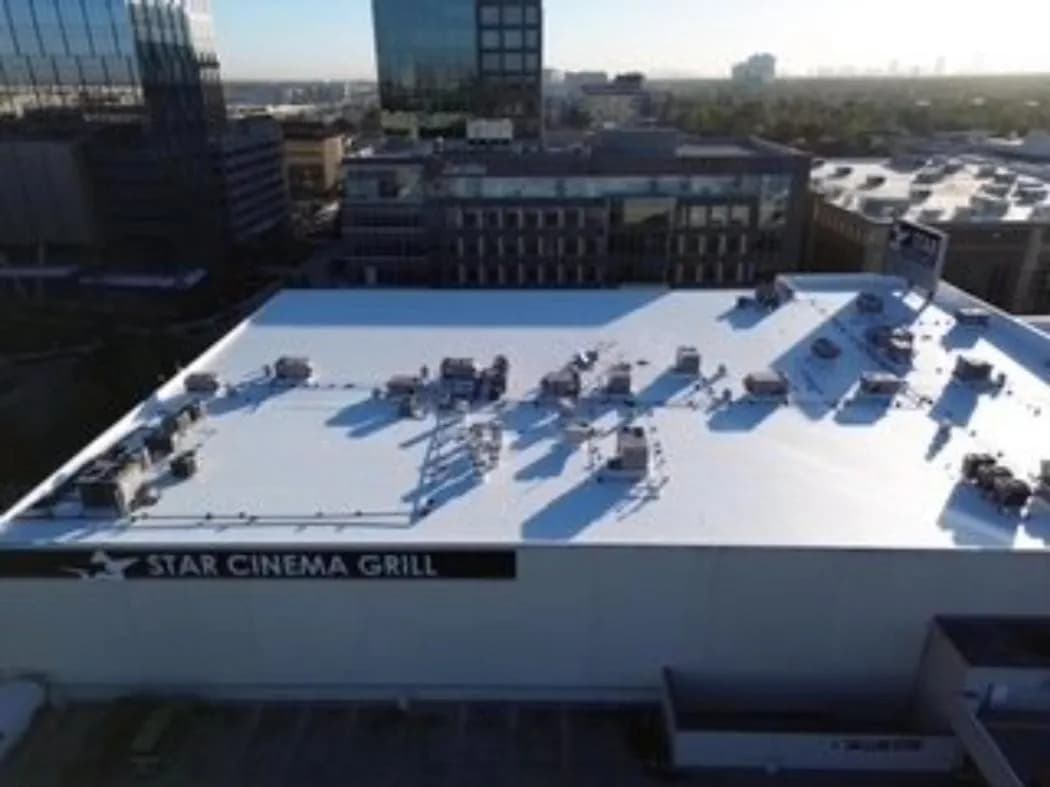
Star Cinema Grill: 45,000 SF Over Mod Bit, and Not One Show Cancelled
A theatre roof has one constraint that outranks all the others: quiet. Here’s how we restored 45,000 square feet without closing an auditorium or interrupting a showing.

 Read More
Projects & Case Studies
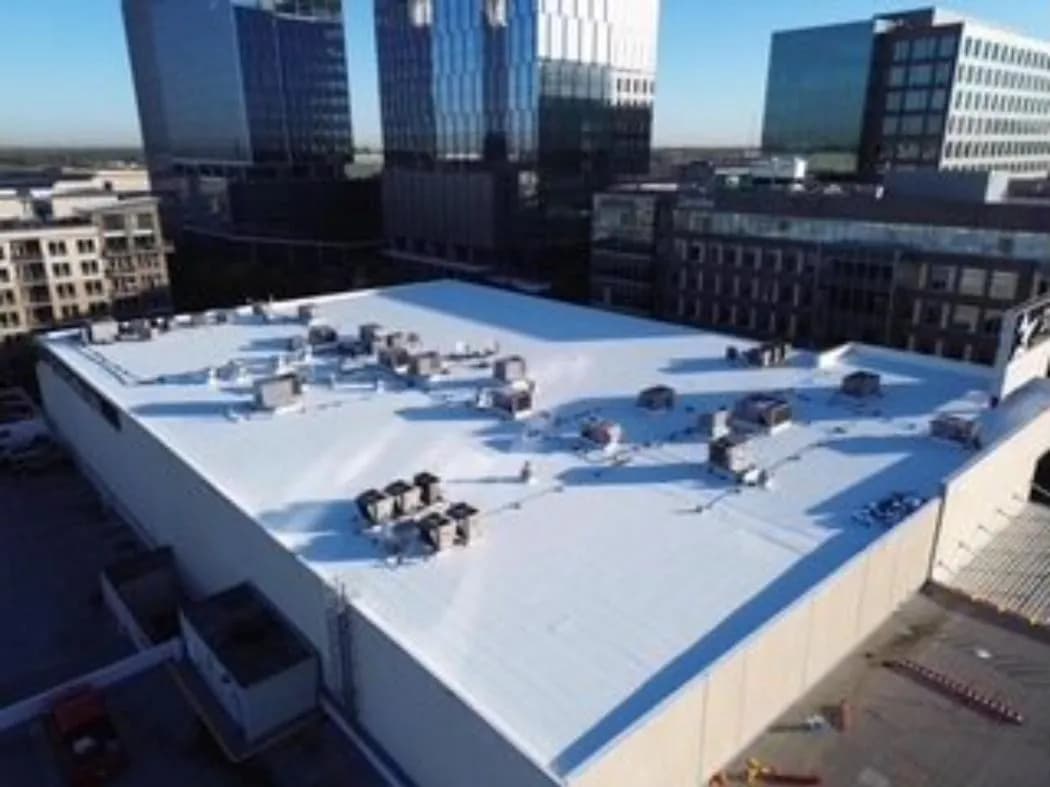
CityCentre Convention Center: 40,000 SF of Mod Bit in the Middle of a Busy District
A modified bitumen roof in one of Houston's densest mixed-use districts, restored in place — with high-rises on every side and an event space that had to stay open.
 Read More
Projects & Case Studies
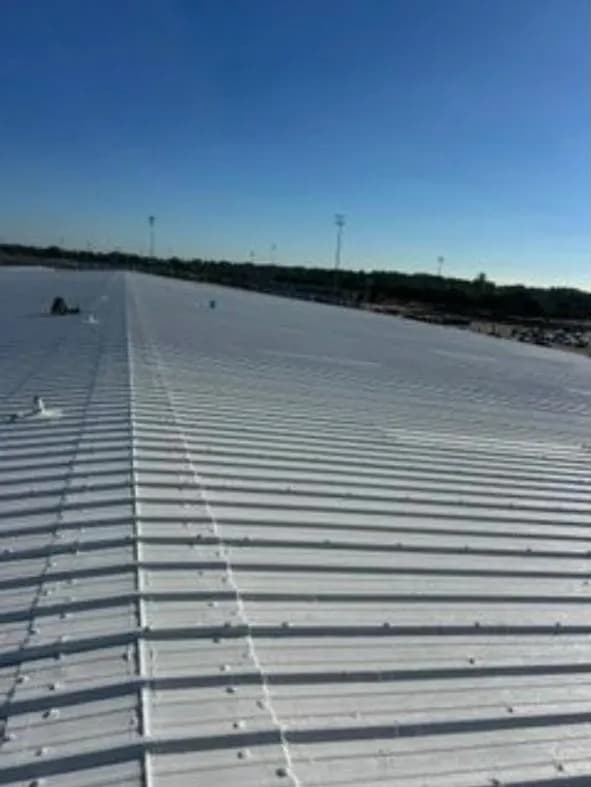
Gulf States Toyota: 109,000 SF of R-Panel Metal, Coated End to End
Our largest metal roof restoration — more than two and a half acres of R-panel coated end to end, with the distribution facility running normally the entire time.