
Restore vs. Replace: The $2 Million Difference Behind a Roof Decision
A full tear-off costs more than double a coating restoration — and the gap gets wider once you factor in waste, downtime, and renewal cycles.
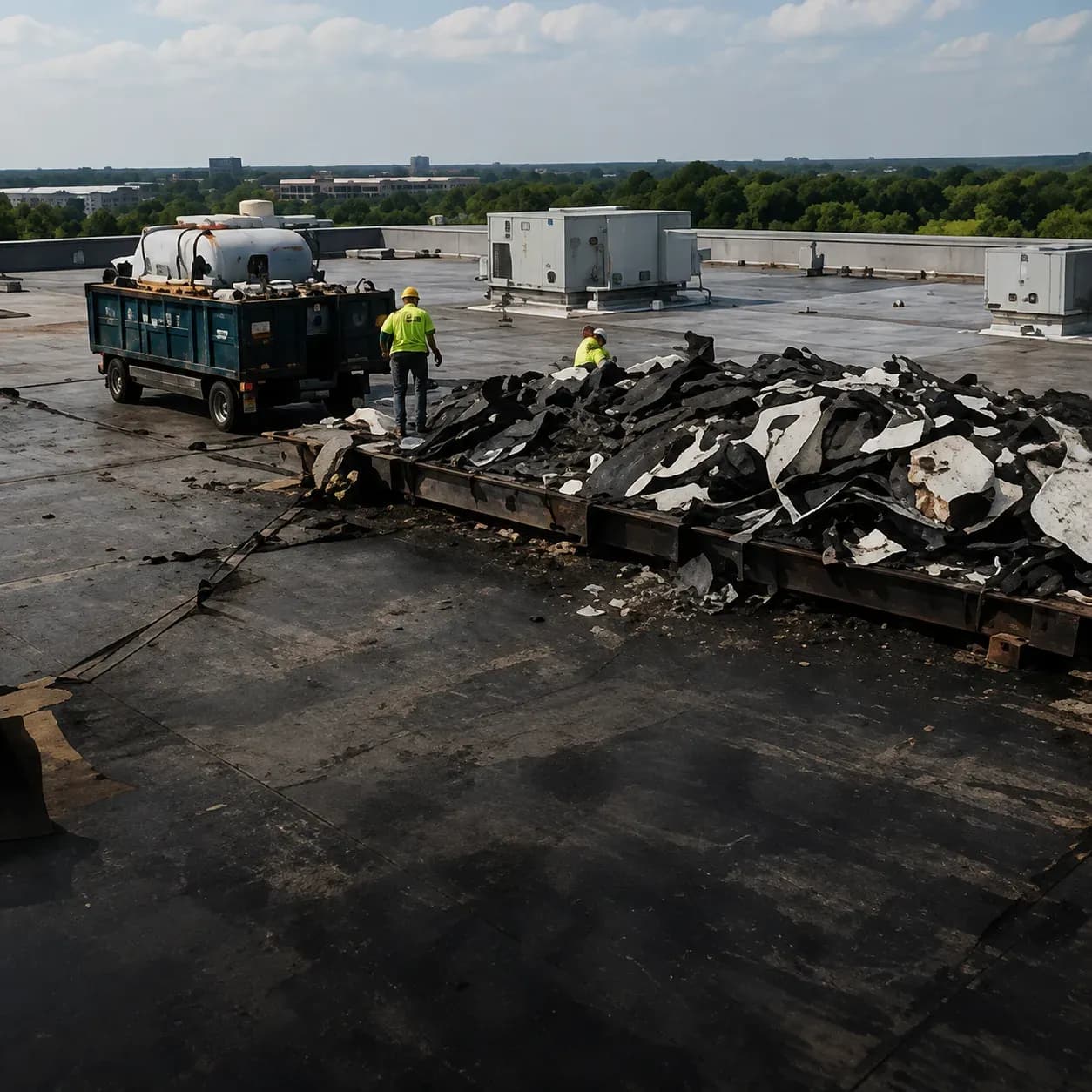
When a roof reaches the end of its expected life, the instinct is often to assume full replacement is the only option. On one recent large-scale school district project, the numbers told a different story.
Phase One: Restore vs. Tear-Off
Restoring the existing roof with a fluid-applied coating system came in at roughly $4 per square foot, compared to roughly $10 per square foot for a full tear-off and replacement.
On this project, that difference translated into immediate savings of $2 million versus the tear-off approach — plus it kept 397 dumpsters’ worth of material out of the landfill, converting what would have been an unsustainable waste stream into a zero-waste project.
Phase Two: Energy Efficiency
Beyond the upfront installation cost, the coating system’s reflectivity produced measurable energy savings — the same category of results seen in the Tomball ISD case, where coated roofs ran cooler and reduced HVAC load. On a large enough footprint, that translated into an additional $2.4 million in energy savings.
Phase Three: Renewal Cost, Long-Term
This is where the math changes most over time. A fluid-applied, fabric-reinforced coating system can be renewed — additional coating layers restore the surface without a full replacement — at roughly $7 per square foot, even assuming that renewal cost doubles over time.
A traditional roof, by contrast, requires a full $10-per-square-foot replacement every time it reaches end of life, with no partial-renewal option. Modeled over one life cycle, that difference alone accounts for $1.35 million in savings.
The full picture, one life cycle
- No tear-off: $2.1 million
- Energy savings: $2.4 million
- Renewal savings: $1.35 million
- Total: $7.2 million
Why this changes the conversation
The upfront cost of a roofing decision is only one part of the equation. When you model the full lifecycle — installation, energy performance, and renewal versus replacement — a restoration approach can outperform a full replacement by a wide margin, without sacrificing durability.
For reference, fluid-applied systems using this approach have also passed FM-4470 wind and hail testing, including surviving Super Typhoon Paka’s 145 mph sustained winds and 236 mph gusts with all 240+ roofs tested remaining intact.
You may also like
 Read More
Projects & Case Studies
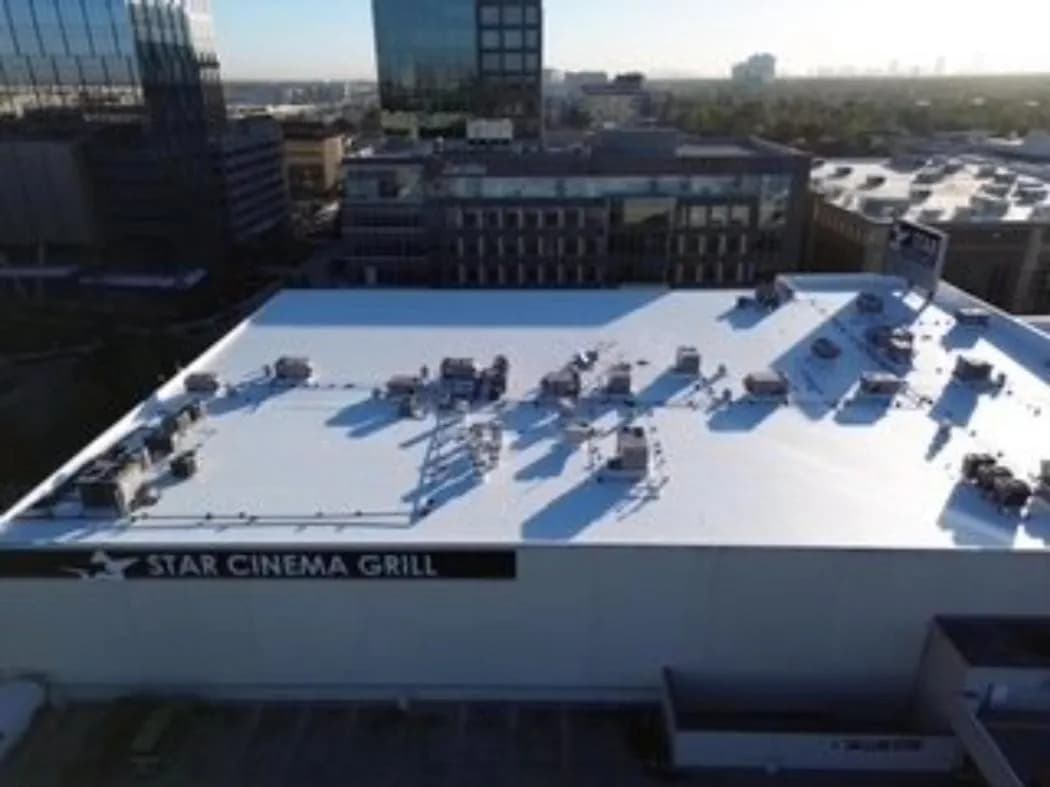
Star Cinema Grill: 45,000 SF Over Mod Bit, and Not One Show Cancelled
A theatre roof has one constraint that outranks all the others: quiet. Here’s how we restored 45,000 square feet without closing an auditorium or interrupting a showing.

 Read More
Projects & Case Studies
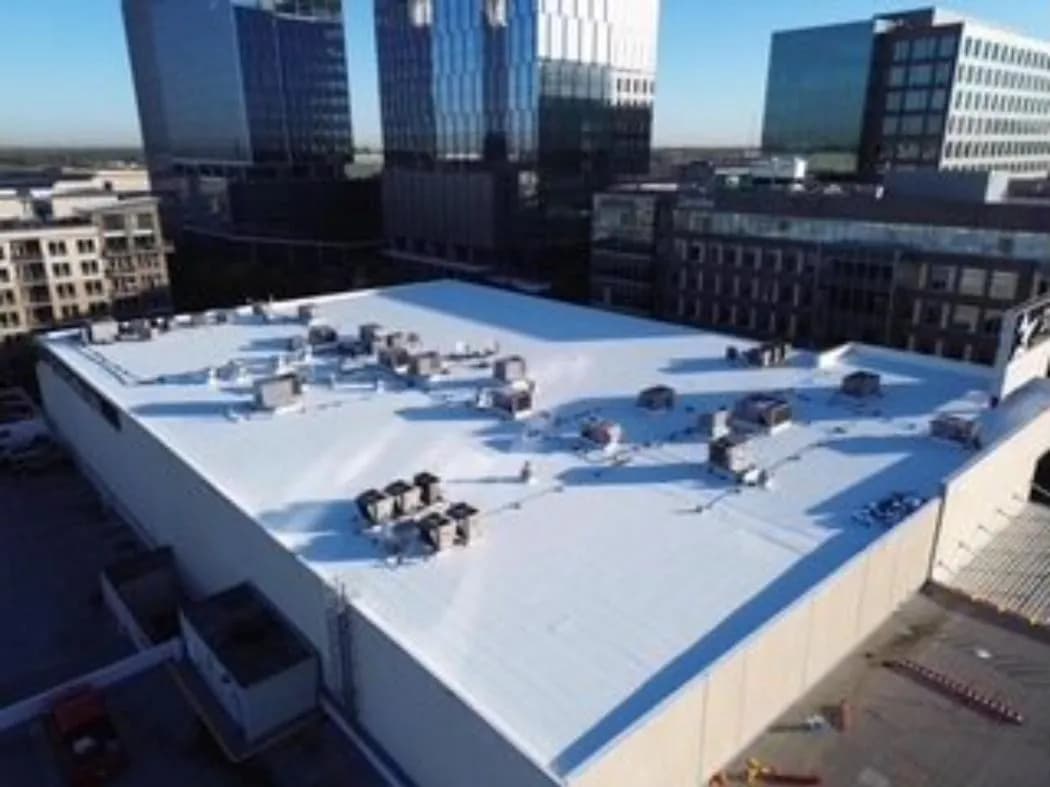
CityCentre Convention Center: 40,000 SF of Mod Bit in the Middle of a Busy District
A modified bitumen roof in one of Houston's densest mixed-use districts, restored in place — with high-rises on every side and an event space that had to stay open.
 Read More
Projects & Case Studies
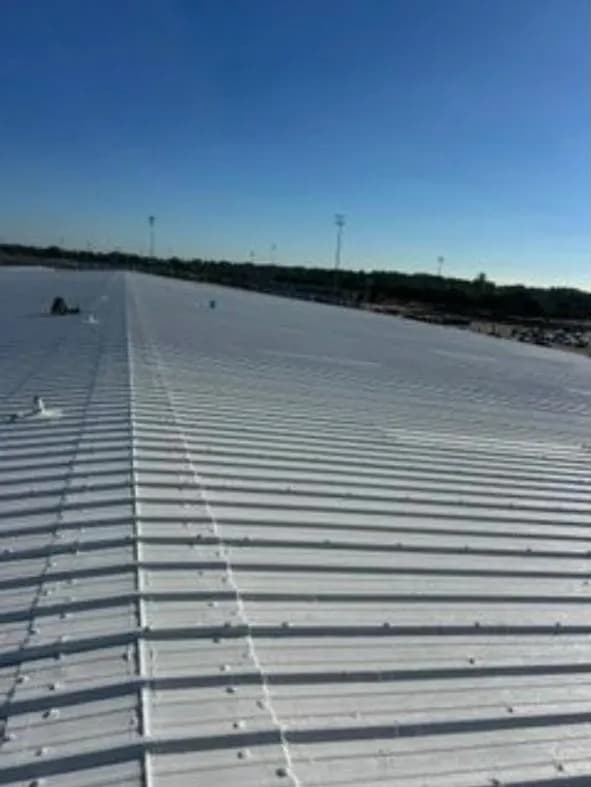
Gulf States Toyota: 109,000 SF of R-Panel Metal, Coated End to End
Our largest metal roof restoration — more than two and a half acres of R-panel coated end to end, with the distribution facility running normally the entire time.