
Can Schools Improve Indoor Air Quality While Reducing HVAC Costs?
A New Approach to School Facilities, Student Health, and Long-Term Investment School districts face a difficult challenge: creating healthier learning environments while managing rising construction costs, energy expenses, and limited budgets.
Traditionally, improving indoor air quality (IAQ) has been viewed as an additional expense. But what if the right indoor air treatment strategy could help offset its own cost through HVAC efficiencies and long-term operational benefits?
At Harvest Innovative Solutions, we believe school districts should evaluate indoor air quality as part of their overall building investment strategy—not simply as another piece of equipment added to an existing system. Our comprehensive school investment evaluation examines how continuous air treatment using CIMR® technology could influence HVAC design, energy consumption, maintenance expenses, and school operations.
The Hidden Cost of Conditioning Outdoor Air
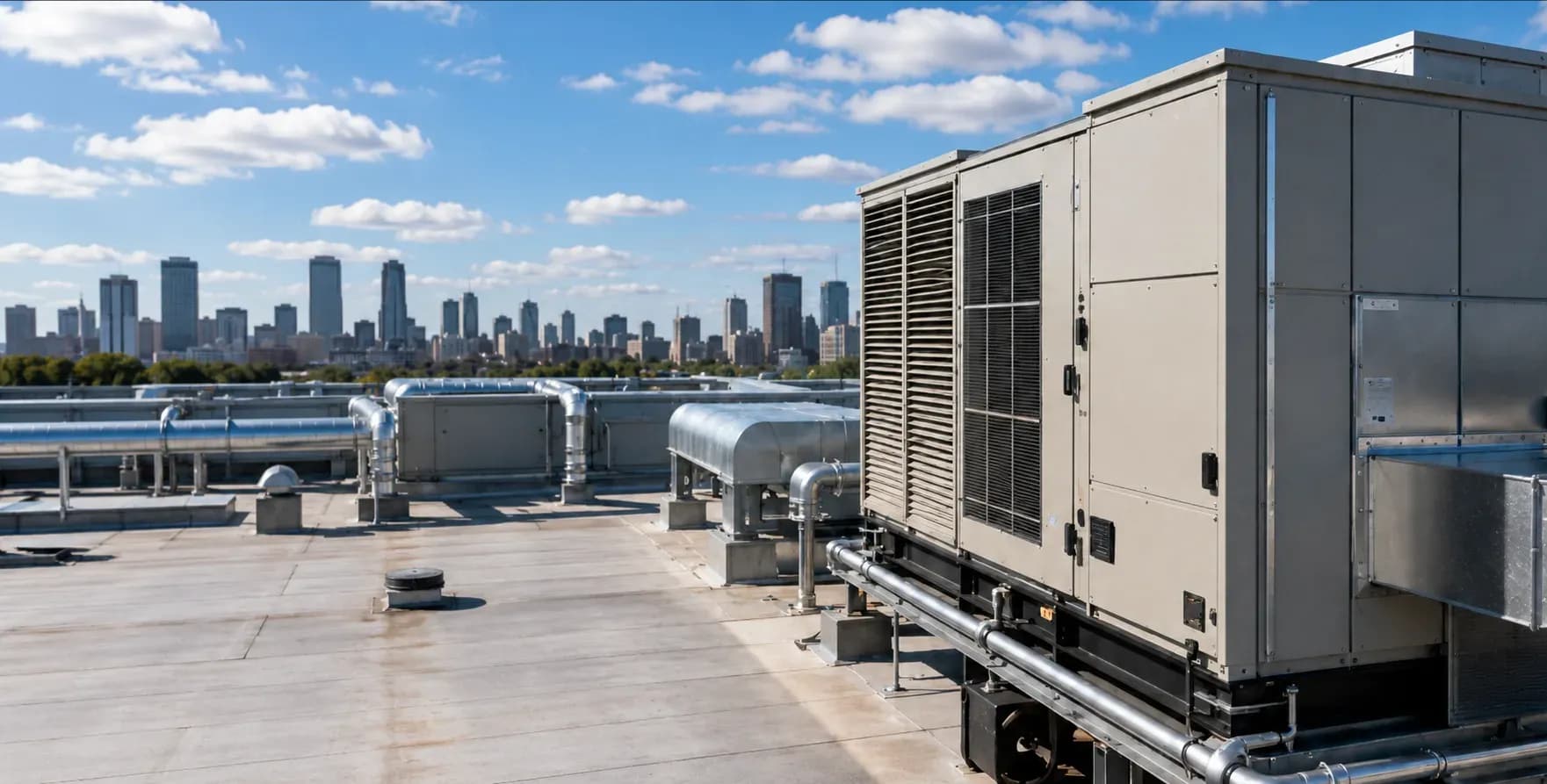
Schools require outdoor ventilation air to maintain acceptable indoor conditions. However, bringing outdoor air into a building carries a significant energy cost, particularly in hot, humid climates such as Houston. Outdoor air must be cooled, dehumidified, and sometimes heated before it can be distributed throughout occupied spaces.
Our engineering evaluation illustrates that conditioning 1,000 cubic feet per minute (CFM) of outdoor air under representative Houston summer conditions can require approximately 4.9 tons of cooling capacity and removal of nearly 34 pounds of moisture per hour.
Continuous air treatment technologies such as CIMR may provide an opportunity for consulting engineers to evaluate alternative indoor air quality strategies. Where applicable codes, standards, performance evidence, and engineering approvals permit changes to ventilation design, schools may be able to reduce certain equipment loads. CIMR does not eliminate the need for outdoor ventilation; any adjustment requires qualified engineering review.
Could Better Air Treatment Reduce Construction Costs?
When indoor air treatment is considered during the early stages of new construction or major HVAC renovation, potential opportunities include smaller or fewer HVAC units, reduced cooling and dehumidification capacity, lower electrical infrastructure requirements, energy savings, and lower future replacement expenses. These benefits only become actual capital savings when the revised engineering design produces different equipment selections and documented construction costs.
What Could the Financial Return Look Like?
Harvest developed three illustrative scenarios for a 100,000-square-foot elementary school serving approximately 900 students. The model assumes a $250,000 initial CIMR installation and a ten-year lifecycle cost of approximately $482,500, including replacement cells and operating allowances.
- Conservative — 10-year net owner value $96,830 · simple 10-year ROI 20.1%
- Reasonable engineering — 10-year net owner value $286,830 · simple 10-year ROI 59.4%
- Higher engineer-verified — 10-year net owner value $541,830 · simple 10-year ROI 112.3%
The scenarios combine assumed HVAC construction savings, energy savings, attendance-related value, and maintenance benefits. These figures are planning projections—not guaranteed savings or measured CIMR results. Actual outcomes require project-specific engineering, construction pricing, operating data, and validation of health-related assumptions.
Healthier Schools Can Create Value Beyond Utility Savings
Student absences disrupt learning, affect classroom continuity, and may require parents to miss work. Teacher absences also create instructional and administrative challenges. Continuous indoor air treatment is intended to address contaminants in occupied spaces, including air and exposed surfaces, as part of a broader IAQ strategy.
The evaluation uses a 24.6% reduction in certain infection-related absences reported in published hand-hygiene research as an illustrative attendance-value benchmark. That finding is not a CIMR-specific efficacy result, and schools should measure actual outcomes before attributing health or attendance savings to the technology.
Beyond the dollar model, school leaders may also consider operational continuity, odor-related concerns, facility confidence, and potential benefits to athletics and extracurricular activities.
A Better Way to Evaluate School Investments
Rather than asking only what an IAQ system costs, districts should ask: What is the total cost—and potential value—of incorporating continuous air treatment into our HVAC and operational strategy? Harvest recommends comparing a conventional code-compliant design with an engineer-approved alternative incorporating CIMR where appropriate, using actual equipment schedules and pricing.
Let's Evaluate the Opportunity for Your School
Whether your district is planning a new school, renovating an existing facility, or preparing for HVAC replacement, the best time to examine these opportunities may be before mechanical design and equipment decisions are finalized. Contact Harvest Innovative Solutions to discuss a school indoor air quality and HVAC investment evaluation.
You may also like
 Read More
October 28, 2026 | Air Quality
How to Evaluate Continuous Air Treatment in a School HVAC Project
A practical framework for school owners and consulting engineers: how to trace every claimed saving from airflow to equipment to construction cost, without relying on unsupported promises.

- Read More
May 14, 2026 | Air Quality
UV, Bi-Polar Ionization, or Better Filtration: Can these systems compare to CIMR?
Not every air quality technology works the same way — or comes without tradeoffs. Here’s a look at other common engineering controls.
 Read More
April 9, 2026 | Air Quality
Sick Building Syndrome Is Costing Schools More Than They Think
Indoor air pollution has ranked among the top five environmental health risks since 1990. Here’s what that actually means for a school building.