TPO, PVC, or Fluid-Applied: Which Cool Roof System Actually Holds Up Long-Term?
All three cool roof systems are reflective. Not all three are built for the same lifespan, climate, or repair reality.
“Cool roof” isn’t one product — it’s a category. TPO, PVC, and fluid-applied fabric-reinforced coatings all qualify as reflective, energy-efficient roofing systems, but they behave very differently once they’re actually on a building.
TPO
TPO membranes are widely used and highly reflective, but formulations vary significantly from manufacturer to manufacturer — a byproduct of years of trial-and-error trying to solve early cracking issues.
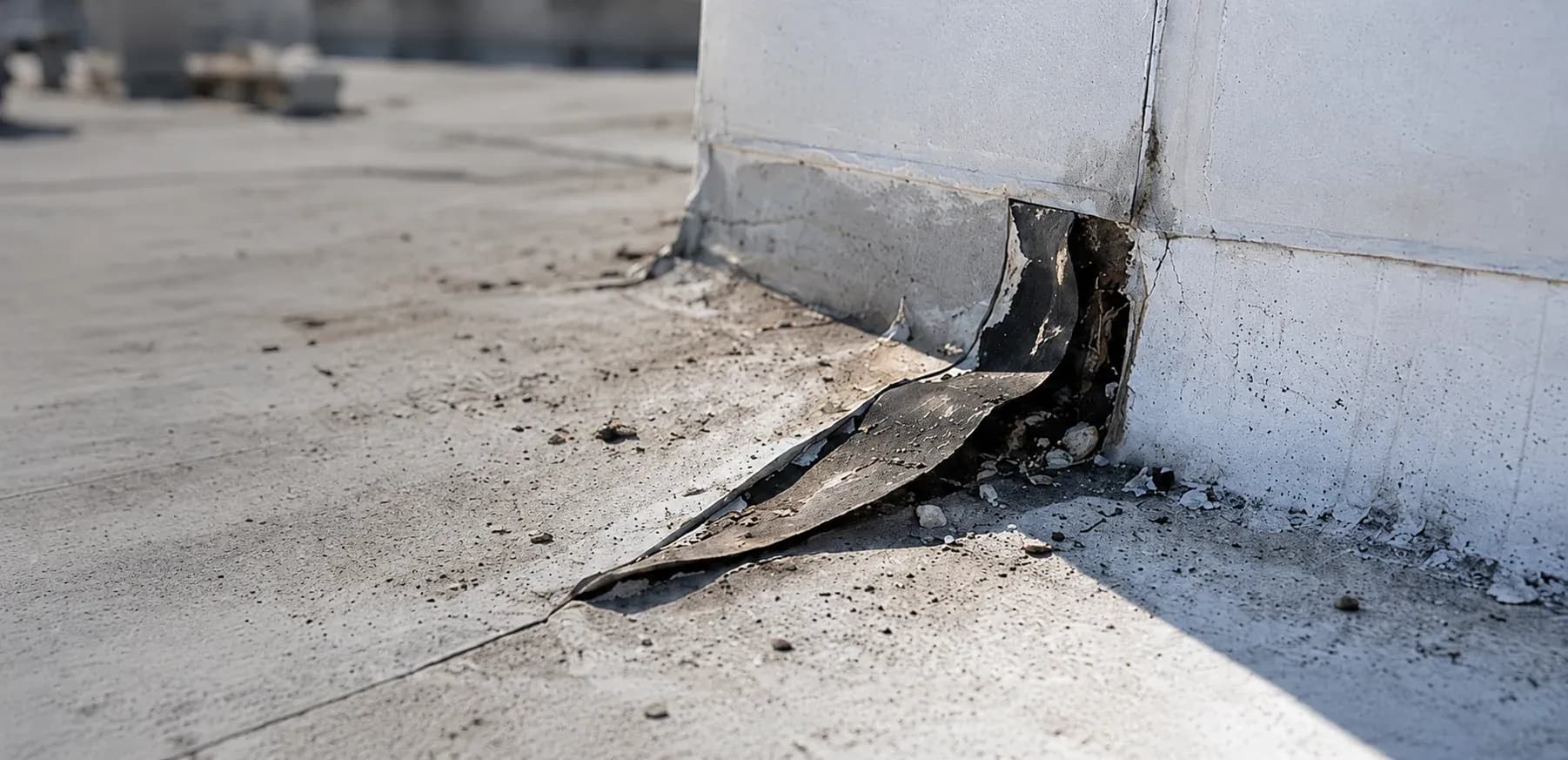
That variation can become a real problem down the road: a new TPO membrane isn’t always compatible with an older one, even from the same manufacturer, which makes patching or adding a new roof penetration harder than it should be. Independent studies have also found that TPO doesn’t perform as well in climates with consistently high heat — a relevant detail for anyone roofing in Texas.
PVC
PVC is strong, chemical-resistant, and can hold up against exposure most other membranes can’t handle — including animal fat from grease vents and even fire.
The tradeoff shows up at install and at repair time. A PVC install typically requires a full tear-off of the old roof, which adds labor cost from day one. And once a PVC roof passes the 10-year mark, repairs get trickier: the hot-air welds needed for patching don’t perform as well on aged material, and foot traffic has to be avoided anytime the temperature drops below 50°F.
Fluid-Applied, Fabric-Reinforced Coatings
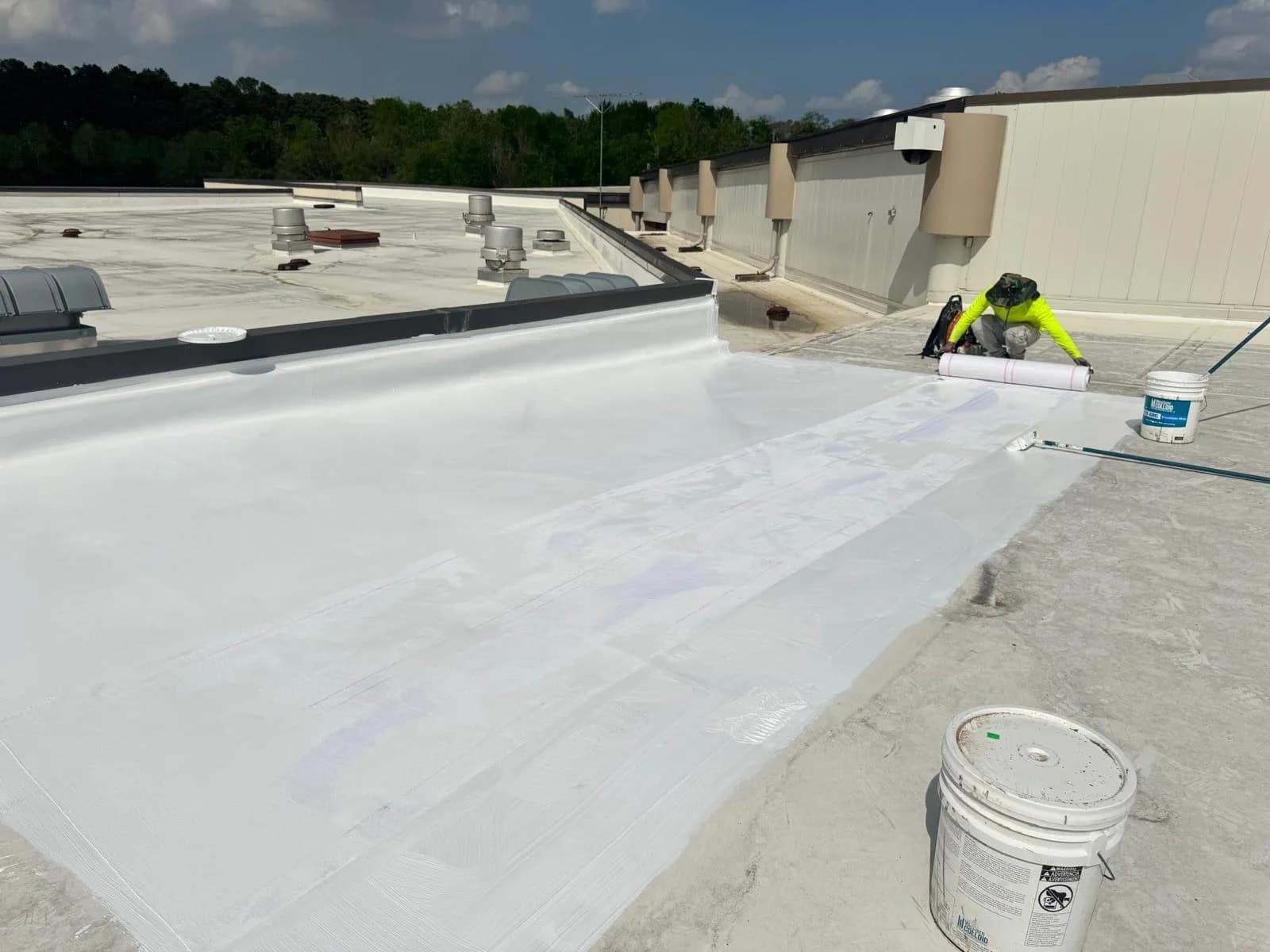
This system works differently from the other two. Instead of rolling out sheets, a fabric-reinforced coating is applied directly over the existing roof — no tear-off required. That means a quiet installation, no smells or toxic emissions, and no landfill waste from stripped-off material.
Because it’s applied as a seamless, monolithic system, there are no welded seams to fail over time. It’s also easier and less expensive to repair, and unlike TPO or PVC, it can be renewed: additional coating layers can be applied to extend the roof’s life rather than replacing the entire system.
The bottom line
Reflectivity gets a roof labeled “cool.” What actually determines whether it’s the right long-term investment is installation cost, repairability, and how the system performs specifically in your climate — not the spec sheet alone.